
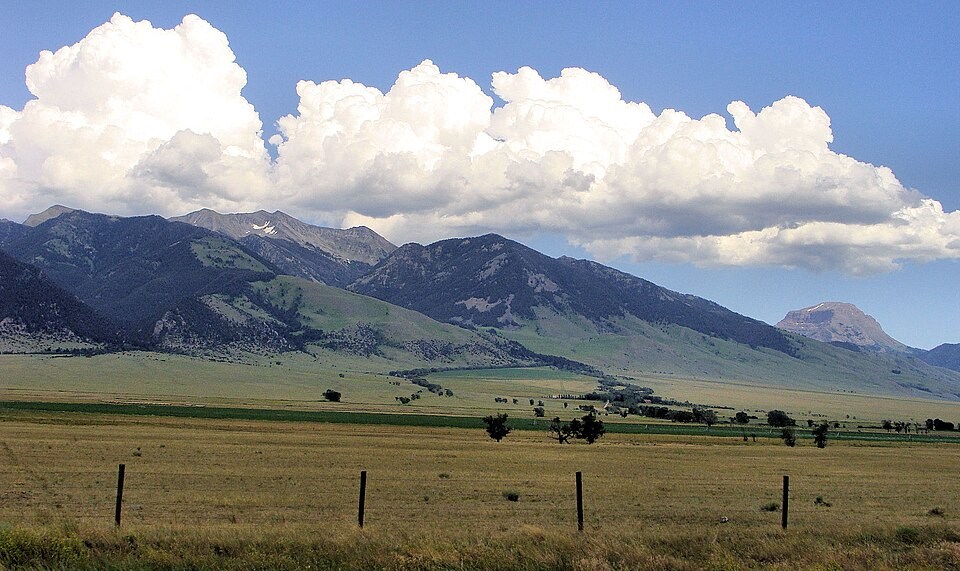
Name and Its Disputed Origin
The USGS Geographic Names Information System attributes the peak's name to geologist E. W. Hilgard. Historical accounts, as reported by Thomas Turiano, raise Ferdinand Hayden and Allen D. Wilson as possible figures who assigned the name, with Wilson's survey party using the summit as a sighting target in 1877–78. The record does not establish with certainty which of them applied the name, and the peak should not be confused with a separately named mountain sharing the same root name in central Utah.
Climbing History
Turiano's historical research identifies Dave Wessel's solo ski approach and ascent in 1948 as the earliest documented climb he found. A 1956 ascent of the east ridge followed, with a party that included Ed Anacker, Bob Witters, and Fred Cartan.
Geology, Glaciation, and Wilderness Designation
USGS mapping of the Madison-Gallatin area identifies the Hilgard fault system as a structural feature of the range, while regional geological mapping documents Pleistocene glacial sculpting that shaped the peak's current relief. The Taylor-Hilgard unit, which encompasses this terrain, was formally designated as part of the Lee Metcalf Wilderness under the Lee Metcalf Wilderness and Management Act of 1983.