
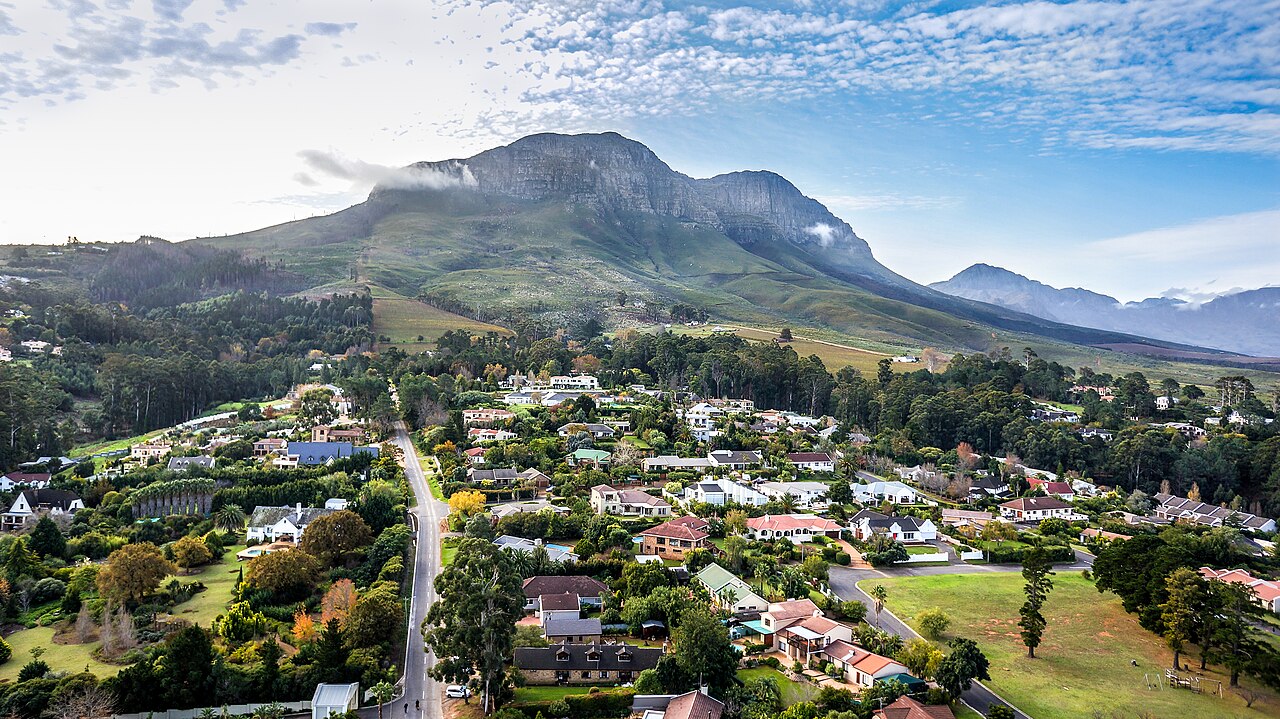
Layered Geology from Slope to Summit Cliff
The lower and middle slopes of Helderberg are underlain by shale, siltstone, and greywacke of the Malmesbury Group. Above these, the upper cliffs are formed from the quartz-rich sandstone of the Peninsula Formation, which accounts for the pale, angular character of the mountain's highest faces. Weathering and rockfall from these cliffs have produced an extensive scree apron that mantles the terrain below them.
Scree Aprons and Fynbos Rooted in Loose Debris
Some fynbos grows on the scree that has accumulated on the middle and lower reaches beneath the sandstone cliffs, with plant communities establishing over debris deposited by rock falls and downslope transport onto older Malmesbury rock. The City of Cape Town's Helderberg Integrated Reserve Management Plan documents the ecological contrasts that occur across short distances on the slopes, reflecting how subtle shifts in substrate and aspect influence which fynbos types take hold.
Municipal Conservation of Threatened Fynbos
The Helderberg Nature Reserve, managed by the City of Cape Town, protects threatened fynbos communities on the mountain's slopes. The reserve management plan identifies multiple vegetation types within its boundaries and frames their conservation in terms of regional biodiversity priorities. The reserve encompasses a defined portion of the mountain and is administered as part of the city's network of conservation facilities.