
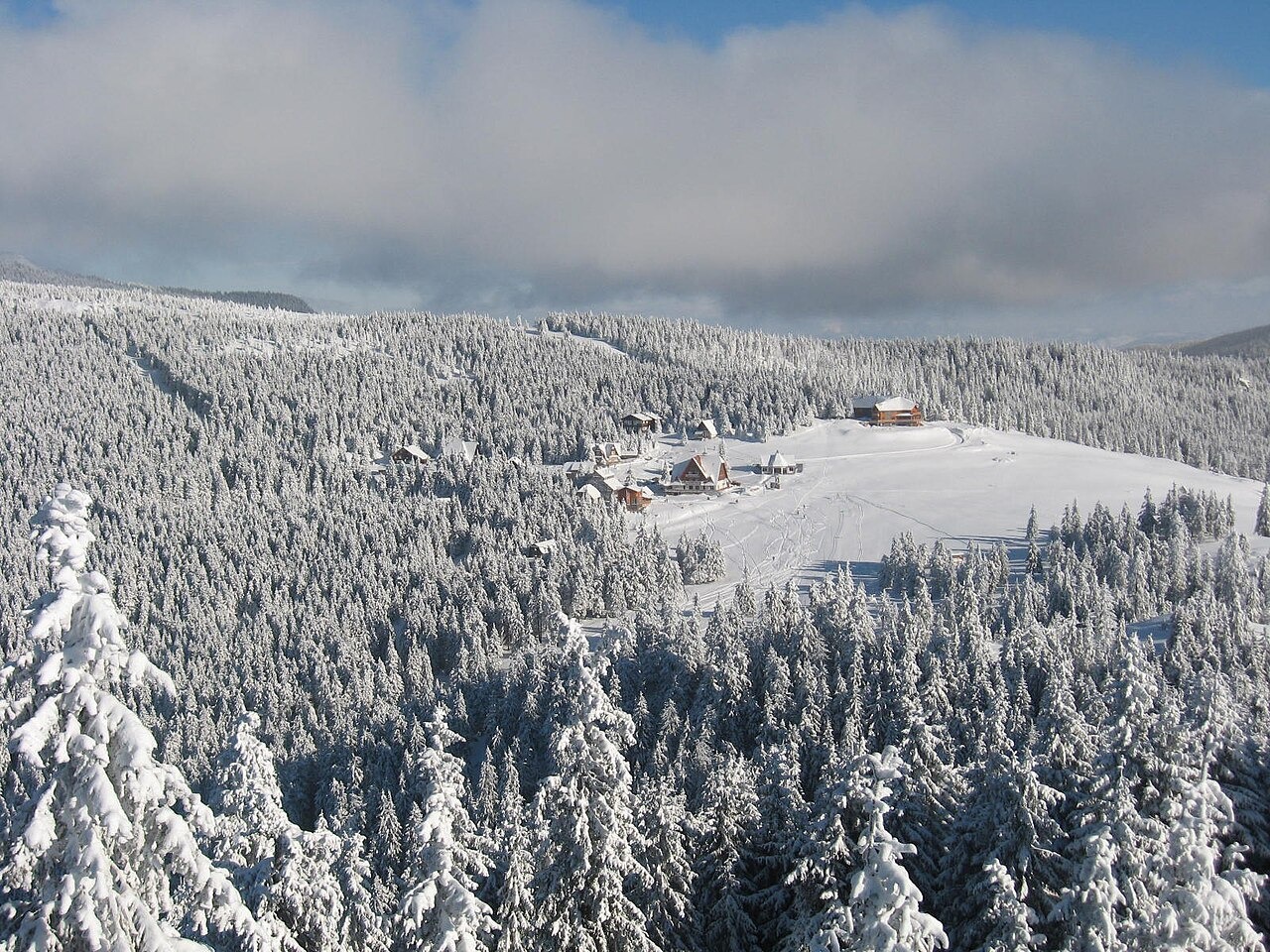
A Volcanic Edifice Reshaped by Erosion
Harghita Mădăraș marks the highest surviving point of the former Vârghiș volcanic edifice within the Harghita Mountains. The structure was built broadly of andesitic lava and pyroclastic rocks as part of the Neogene volcanic chain running through the Eastern Carpathians. Old crater hollows in the northern part of the range were subsequently enlarged by erosion.
Periglacial Landforms at the Summit
Above the local forest limit, the summit area displays landforms produced by sustained frost action. A study published in 2022 documented cryoplanation terraces, block fields, and tongues of locally frost-shattered debris, establishing that periglacial weathering has progressively reworked the volcanic surface since the edifice's active phase ended.
The Sacred Mountain of the Székely
The county tourism authority for Harghita records a regional tradition in which Harghita Mădăraș is called the sacred mountain of the Székely people. The wider conservation area includes habitats such as active bogs, wooded bogs, and acid-loving montane Norway spruce forest, with a management plan approved in 2016.