
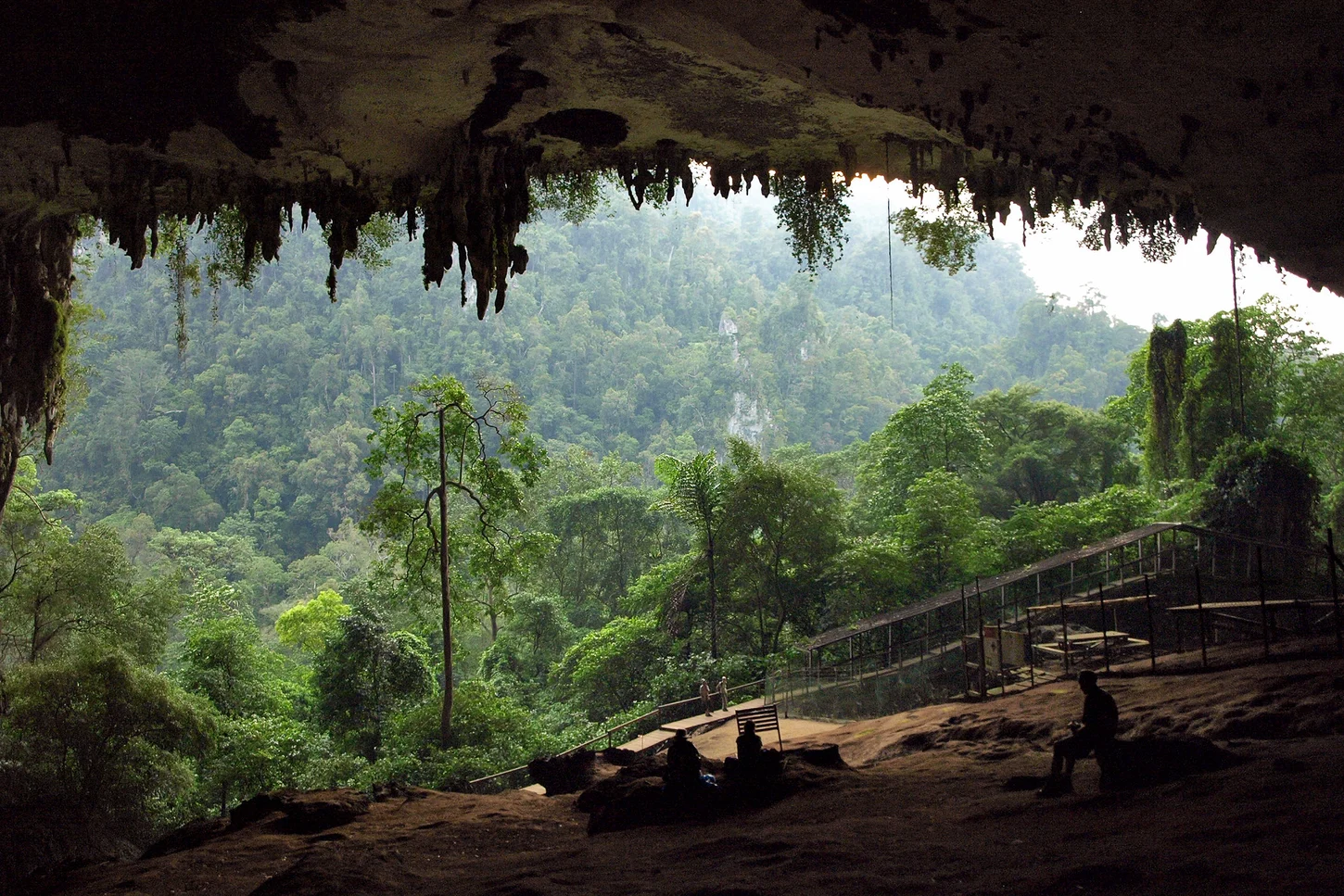
Two Limestone Formations
Malaysia's World Heritage nomination dossier identifies Bukit Bekajang as a separate outlying block divided from Gunung Subis by a gorge. The archaeological excavations that brought Niah its scientific reputation are located within Bukit Bekajang. The gorge itself is a karst feature produced by the same dissolution processes that hollowed the caverns within the outlying block.
The 1958 Deep Skull Excavation
The Sarawak Museum records 1958 as the year a partial human cranium, known as the Deep Skull, was recovered from the cave deposits at Niah. UNESCO's assessment of the site places evidence of human interaction with the Niah caves at approximately 50,000 years, a figure spanning the full archaeological record rather than the age of the skull.
Park Designation and World Heritage Inscription
Niah was designated a national park in 1974, establishing protected boundaries around the massif and cave systems. The archaeological cave heritage of Niah National Park was inscribed on the UNESCO World Heritage List in 2024 under the designation "The Archaeological Heritage of Niah National Park's Caves," more than fifty years after the park's establishment.