
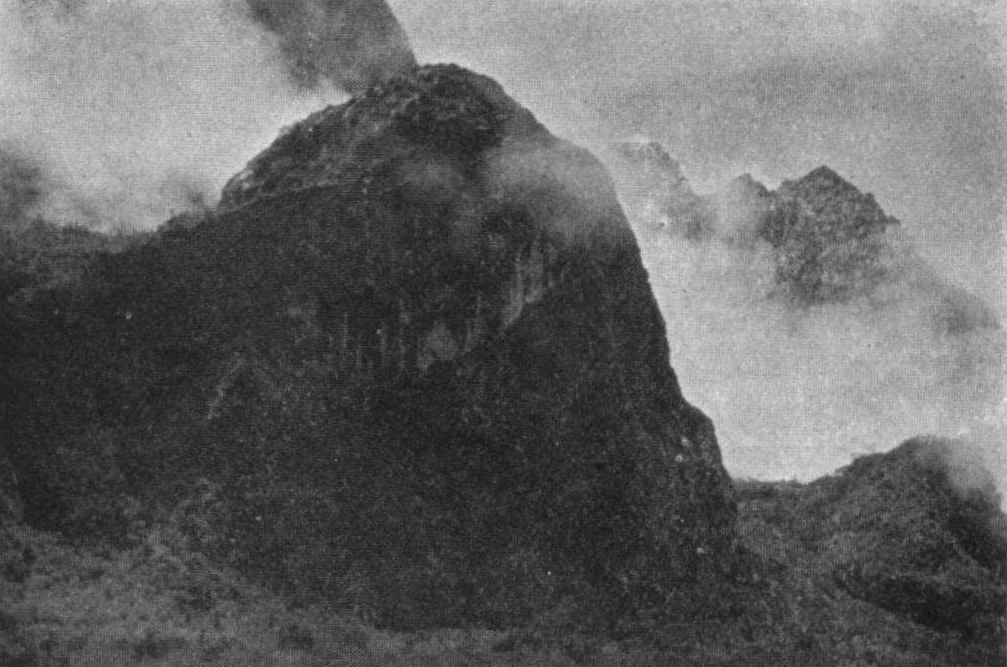
Geological Character of the Outcrop
During the 1936 Carstensz expedition, which departed Aika on 29 October, geologist Jean Jacques Dozy examined the exposure directly. His 1939 study describes a dark face bearing green malachite at an igneous contact, with lighter limestone above — a geometry visible in Figure 6 of the published journal report. This structure is a skarn: rock formed by chemical alteration of carbonate host material at an intrusive contact.
Dozy and his collaborators identified copper-bearing minerals including chalcopyrite, bornite, and malachite. Collaborator C. Schouten examined polished specimens of sample no. 52 from the outcrop and identified gold-bearing copper ore, establishing that the deposit carried both metals before any extraction had begun.
The 1960 Expedition and Amungme Contribution
Freeport's 2024 sustainability chronology records a follow-up exploration in 1960 led by Forbes Wilson and Del Flint, which confirmed the copper and gold mineralization identified in 1939. The company's historical community publication identifies Mozes Tembak Kilaning, an Amungme guide from the Tsing Valley, as an important contributor to the expedition, routing the party through the terrain, managing logistics, and settling problems encountered along the way; this attribution appears in a corporate retrospective account.
Development Chronology and Operational Transitions
Indonesia granted a development contract in 1967. Freeport's corporate and technical accounts cite 1973 for the copper project becoming fully operational and the first processing facilities being commissioned. In 1981, block-cave mining began at the GBT zone below the original open pit, according to official corporate history. Indonesia's Supreme Audit Agency uses the original highest point of Ertsberg as a survey reference for Block A.
The Grasberg deposit, documented in 1988, is a distinct ore body within the broader district and is not part of the Ertsberg outcrop documented by Dozy. Ertsberg East and Big Gossan are similarly separate features within the same mineralized zone.