
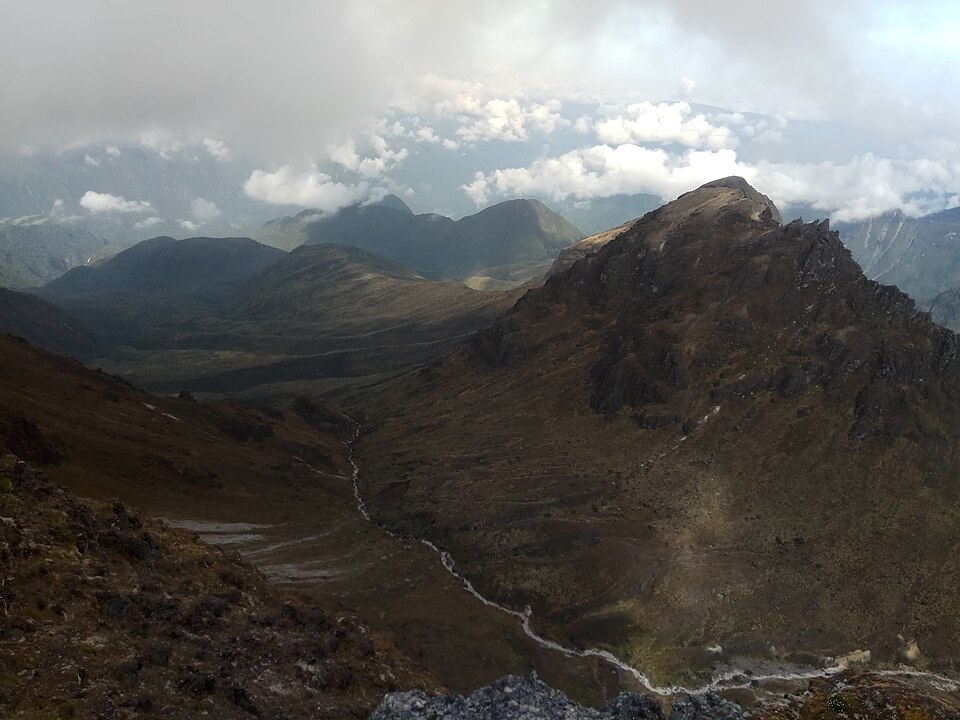
Crater Structure and Dynamics
The caldera, open to the west, channels pyroclastic flows and lahars toward the western sector, while ash produced in eruptions can reach Quito to the east. Within the caldera, the Cristal dome is an accumulation of viscous lava extruded in successive episodes. When a dome collapses, the hot material descends rapidly through the ravines as debris flows and gases.
The 1660 Eruption
In October and November 1660 the volcano produced ashfalls that reached Quito. In November, while the eruptive sequence continued, the city's Cabildo sent people to reconnoiter the volcano.
The 1999–2000 Crisis
Between 1999 and 2000, the growth and collapse of lava domes generated explosions and ash columns. In October 1999, ashfalls were recorded over Quito.