
Territory and Name
The mountain sits on the traditional territories of the Coast Salish peoples, a fact that predates every other chapter of its recorded history. The name Grouse Mountain derives from the sooty grouse — also known as the blue grouse — a game bird commonly found across the mountain's slopes. According to Wikipedia, the first recorded non-Indigenous hikers to reach the peak did so in October 1894, and it was they who assigned the name in reference to the bird they encountered along the way. The BC Geographical Names Office classifies the name as English in origin and its status as official, placing the feature east of Capilano Lake in the North Vancouver district municipality within the New Westminster Land District.
Fire, Reconstruction, and the Aerial Tramways
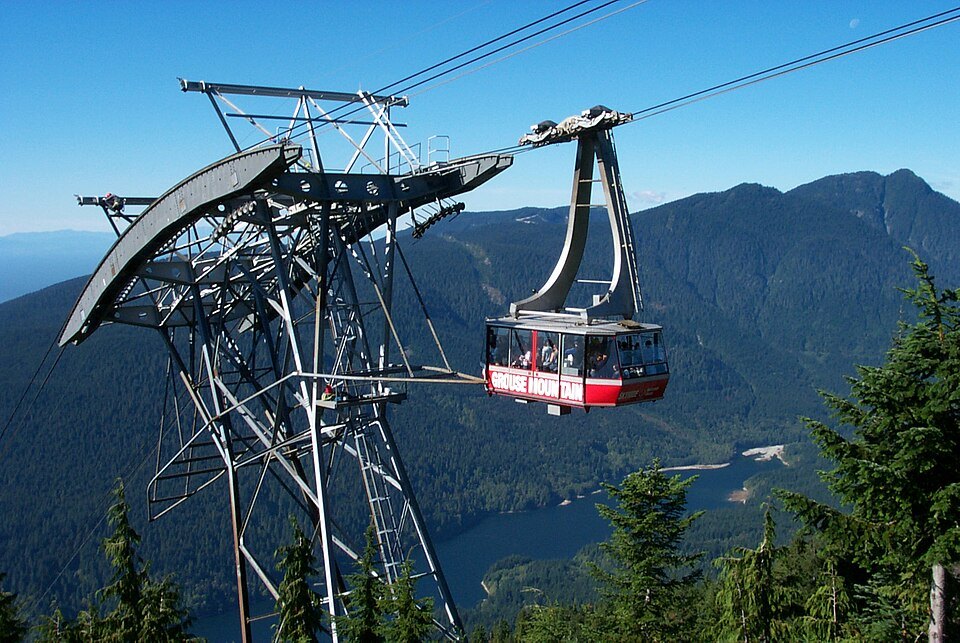
The mountain's current infrastructure owes its form largely to a fire that destroyed the original lodge in the winter of 1962. Following the blaze, the two original lifts were removed in the 1970s. The government of British Columbia, recognising the site's tourism potential, provided funding and permits for a new ridge-top lodge and an aerial tramway connecting the valley floor to the mountaintop. That tramway, constructed by an Austrian steel company and known as the Blue Tram, marked the beginning of the resort's modern era.
Ten years after the Blue Tram's construction, the mountain was purchased from its original owners by the McLaughlin family in 1976. Under that ownership, a second aerial tramway was commissioned in the same year, built by Garaventa and known as the Red Tram or the Super Skyride. The Super Skyride employs substantially larger tram cars capable of holding just under 100 passengers and arrives at a separate top terminal from the Blue Tram. It has since become the principal tramway serving the mountain.
The Resort and Its Terrain
Grouse Mountain Resort operates an alpine ski area on the mountain's upper slopes, with four chairlifts servicing 33 runs. The resort's position directly above Metro Vancouver makes it one of the most visually distinctive ski areas in Canada — the city's grid and waterways are visible from the top in clear conditions. The BC Geographical Names Office categorises the site as a recreation facility, specifically infrastructure associated with recreational or leisure activities and generally designed for day-use, underscoring its role as an accessible destination rather than a remote alpine objective.