
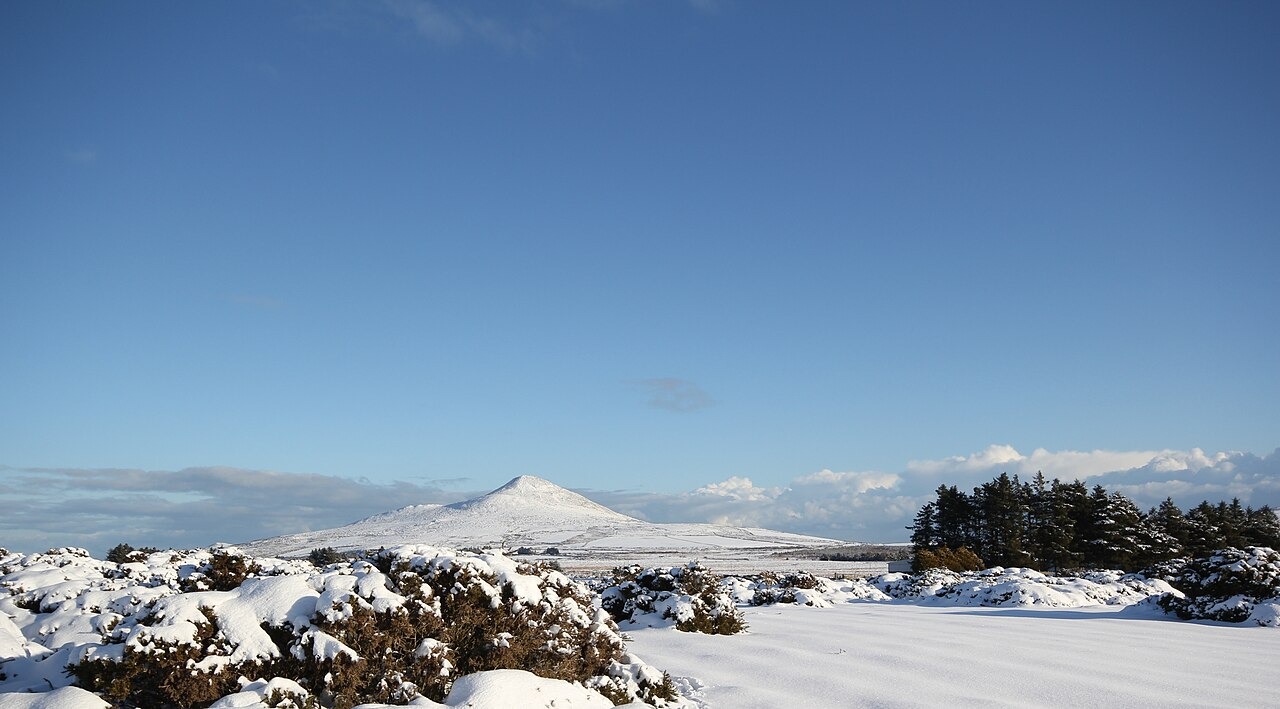
Rock and Form
The Geological Survey of Ireland identifies the summit as Cambrian quartzite belonging to the Bray Head Formation, a pale-pink, highly resistant rock that holds the peak's steep-sided shape. The southwest slopes carry greywacke and quartzite, and the GSI records the rock as a metamorphosed sandstone.
Scree and Glacial History
The angular scree covering the exposed upper slopes accumulated through repeated freezing and thawing during the last glacial period. These fragments were shed from the bedrock as ice worked into joints and expanded, leaving aprons of broken stone visible today.
Irish Names and the Archival Record
The mountain carries Irish names recorded by Fáilte Ireland as Ó Cualann and Beannach Mhór. The National Library of Ireland holds a drawing in the A. R. Nevill county-map collection depicting a rock-hauling scene with the Sugarloaf visible in the distance, placing the peak within the Irish cartographic and documentary record.