
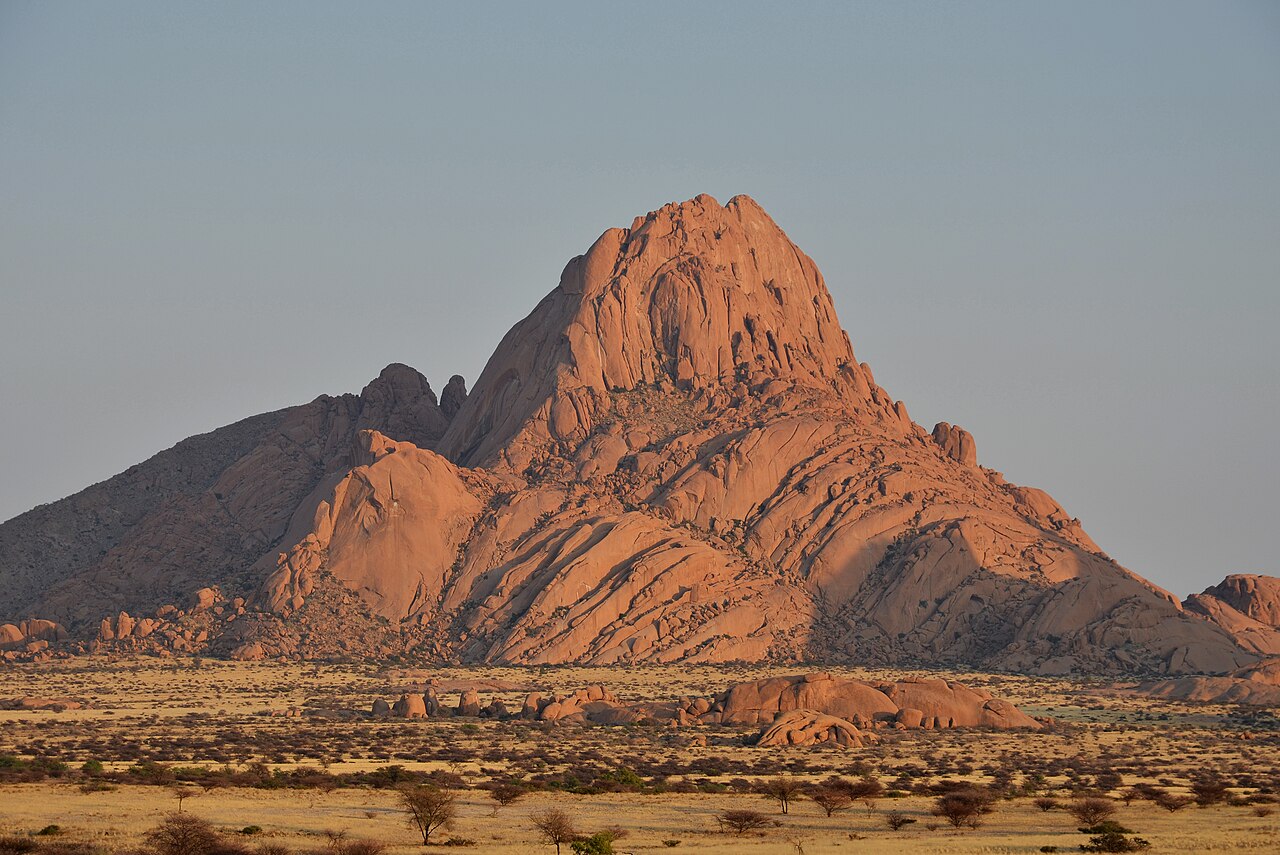
Granite Intrusion and Exposed Relief
The Geological Survey of Namibia documents the granite as an intrusive body emplaced around 135 million years ago during the Mesozoic. Differential erosion stripped away the softer surrounding formations over geological time, leaving the harder granite standing in abrupt relief of 600–700 metres above the adjacent plains. The resulting inselberg form is characteristic of several massifs across the Erongo Region.
First Documented Summit Ascent and Modern Climbing
The American Alpine Journal records the first documented ascent of Great Spitzkoppe in 1946. Decades later the Northwest Face attracted further technical attention, with climbers documenting new routes including Mamba No. 5, as reported in the American Alpine Journal's first-person account of that expedition. These records establish Great Spitzkoppe as a site of continued interest in the history of African climbing.
Rock Art at Pontok and the Wider Spitzkoppe Group
The neighbouring Pontok Hills contain San rock art shelters that are considered among the notable painted sites of the region. The broader Spitzkoppe group also includes a natural arch, a distinct geological feature separate from the main summit massif. These elements together give the area cultural and geological significance beyond the inselberg itself.