
Metamorphic Basement and Nama Group Stratigraphy
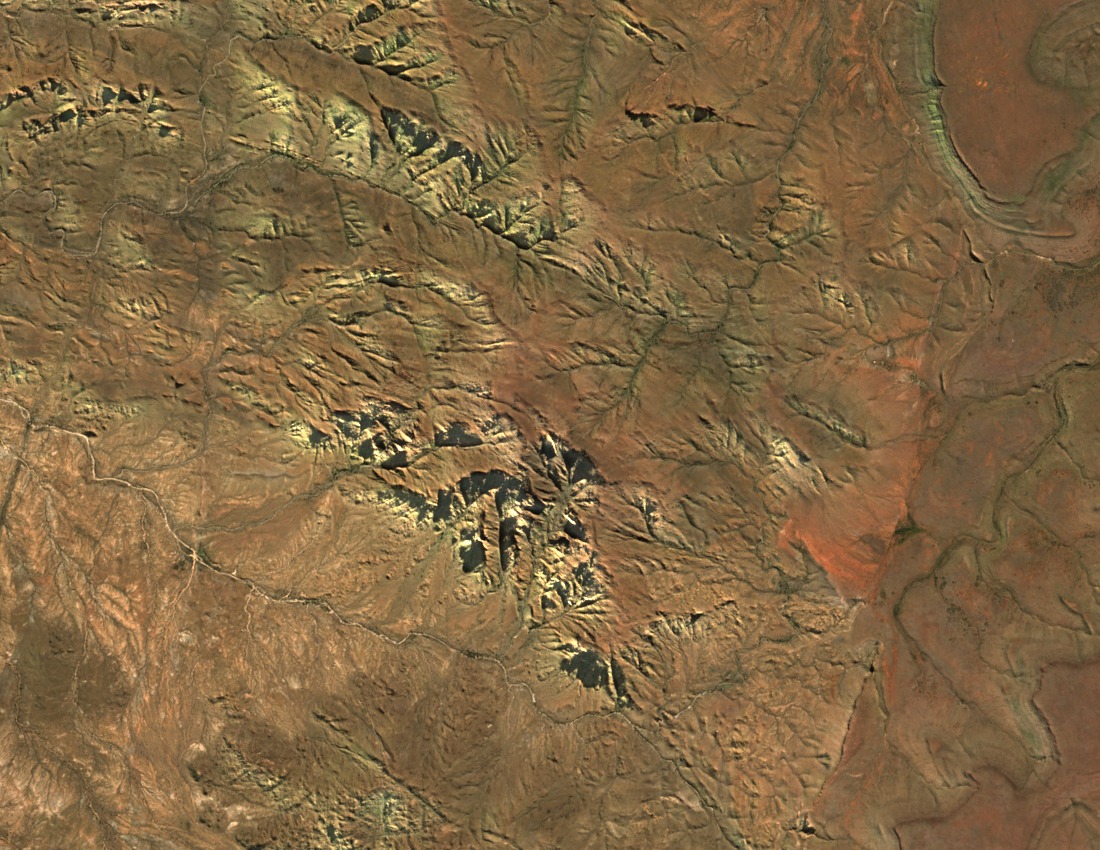
The foundations of the range rest on metamorphic basement rock approximately 1,200 million years old. Nama Group sediments were deposited over this older basement, and normal faulting later elevated the block to its present position. The Atlas of Namibia and the earth science field review of the Orange–Fish River basin both document this stratigraphic relationship, distinguishing the age of the basement from the separate event of the range's uplift.
Schroffenstein and the Relief of the Uplifted Block
At 2,202 m, Schroffenstein is the summit of the Great Karas massif. The geological field review records relief exceeding 700 m between the plateau surface and the surrounding plains, a measure that reflects the scale of the fault-driven uplift rather than gradual erosional shaping alone. This pronounced topographic step defines the range's visual and physical character within the ǁKharas Region.
Petalidium karasbergense: A Range-Endemic Shrub
In 2023, botanists Wessel Swanepoel and Abraham E. van Wyk formally described Petalidium karasbergense, a new species in the Acanthaceae family, based on herbarium specimens and fieldwork. The species is associated with arid hillsides and dwarf shrublands within this range. Their account, published through the University of Pretoria repository, documents the Great Karas Mountains as the known range of this plant.