
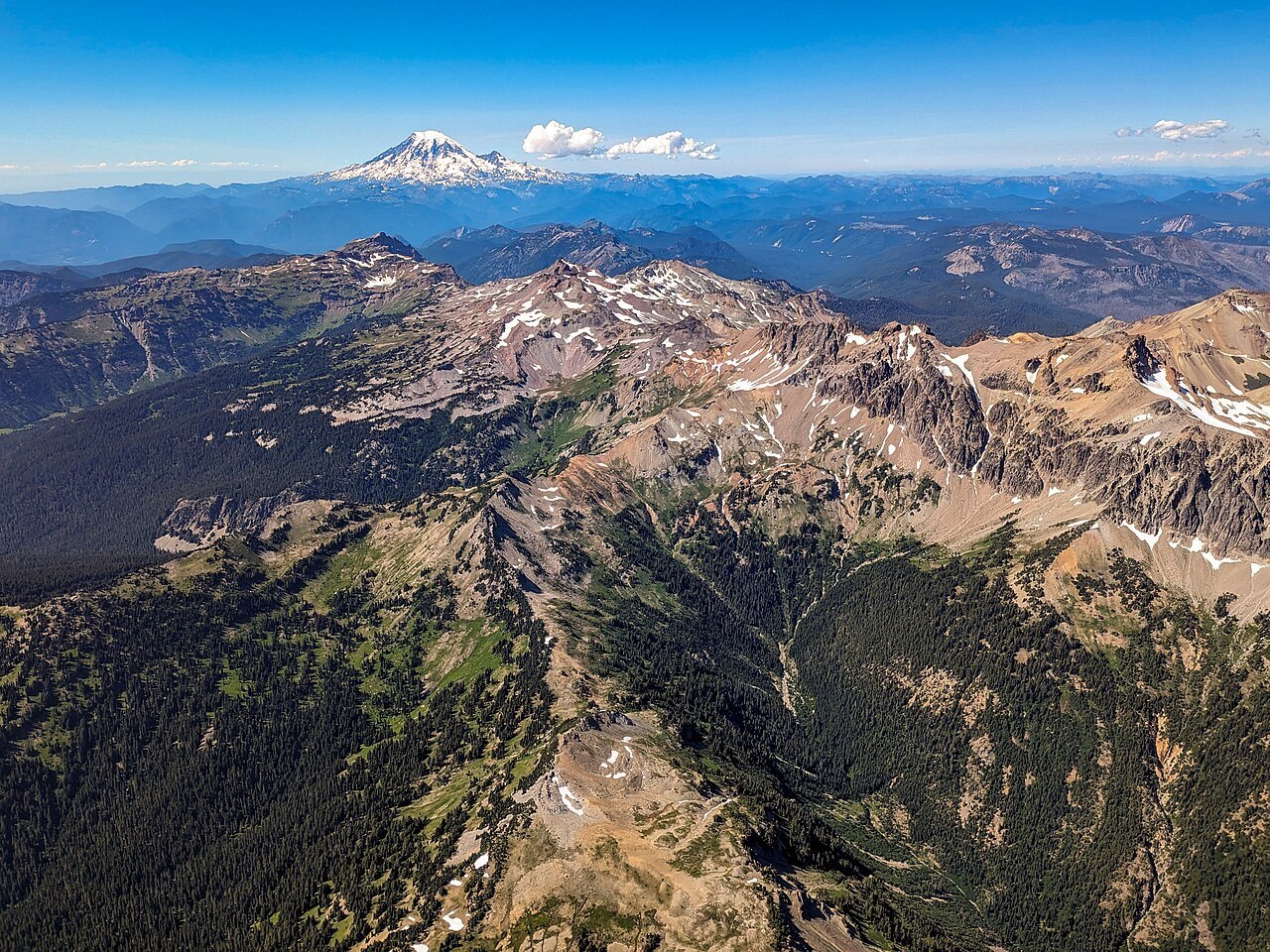
A Volcanic Mass Shaped by Glaciation
The Forest Service documents perennial glaciers across the massif alongside deep valleys and small alpine lakes. Glaciation has sharpened former flanks into arêtes, carved cirques into the old volcanic rock, and left scattered tarns in scoured basins — features that distinguish Goat Rocks from the still-conical volcanoes elsewhere in the range.
Wilderness Designation
Goat Rocks Wilderness was established in 1964 under the Wilderness Act, among the first areas to receive federal wilderness protection in the Pacific Northwest. A separate boundary record dates to 1984, representing a later administrative determination distinct from the original designation.
Alpine Character of the Massif
Perennial glaciers on sheltered aspects contribute meltwater to valley drainages below the massif. The resulting mosaic of rocky ridges, meadow basins, and cirque lakes gives Goat Rocks an alpine character uncommon in the southern Washington Cascades, where most ranges lack residual glacial ice.