
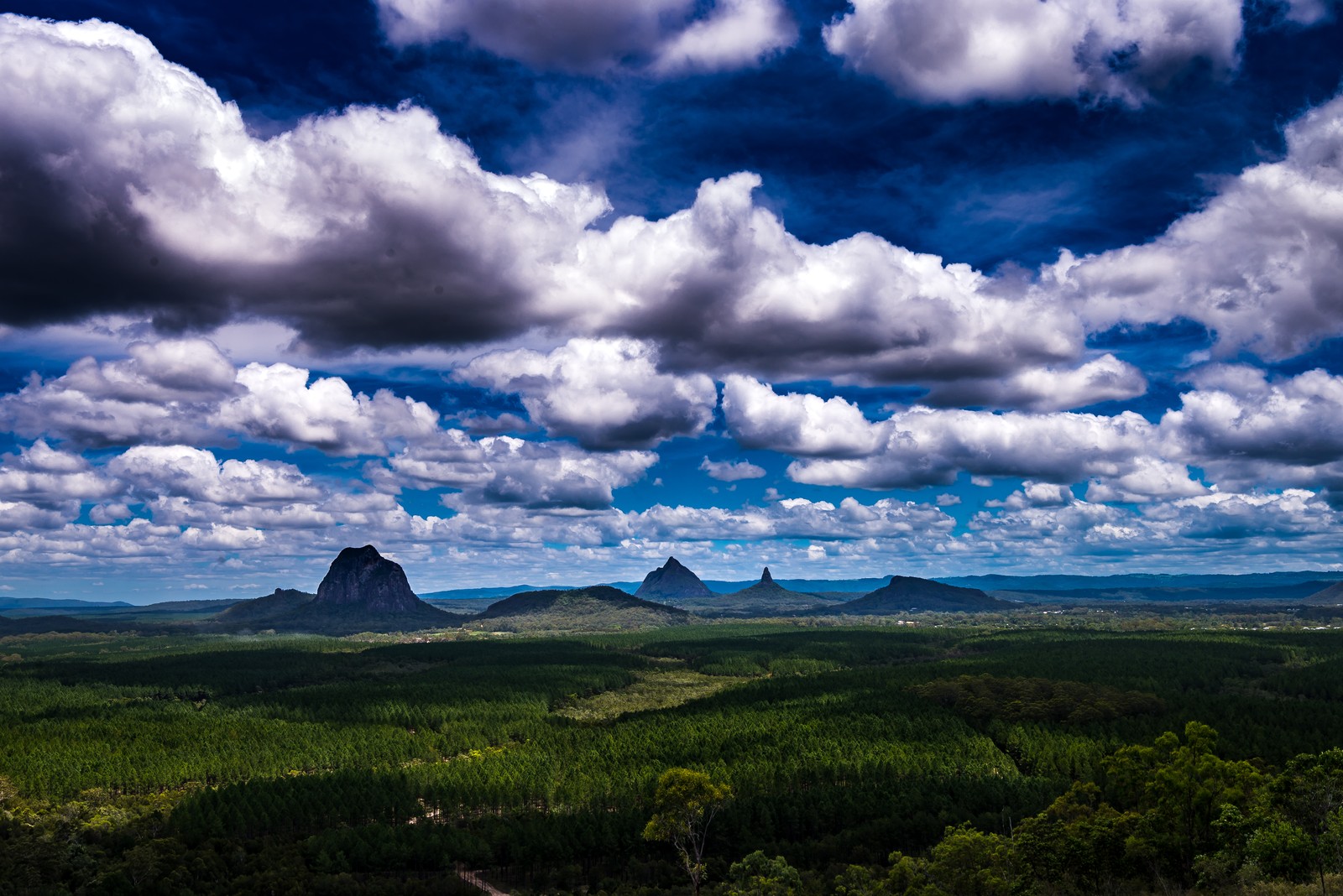
Volcanic Origins and Landform
According to Queensland Parks and Wildlife Service, volcanism that formed the Glass House Mountains occurred approximately 25 to 27 million years ago. Magma cooled into hard trachyte and rhyolite in vents and below ground. Erosion wore away the surrounding sandstone and volcanic slopes, exposing the resistant cores. Beerwah and Ngungun still show columns that formed as the rock cooled.
Kabi Kabi, Jinibara, and Ceremonial Country
Queensland State Archives recognises the Glass House Mountains as lying within the traditional lands of the Kabi Kabi and Jinibara peoples. The Queensland state parks guide records protected ceremonial places and describes the area as a longstanding place for First Nations gatherings and trade. Seasonal gatherings followed the availability of food, including bunya nuts.
Cook's Naming and the 1799 Climb of Beerburrum
On 17 May 1770, James Cook recorded that he had named the peaks Glass Houses because of their shape as seen from the sea. On 26 July 1799, navigator Matthew Flinders, Aboriginal intermediary Bongaree (also recorded as Bungaree), and two sailors from Norfolk climbed Mount Beerburrum, as documented in the Sunshine Coast heritage timeline. The group was listed on the National Heritage List on 3 August 2006.