
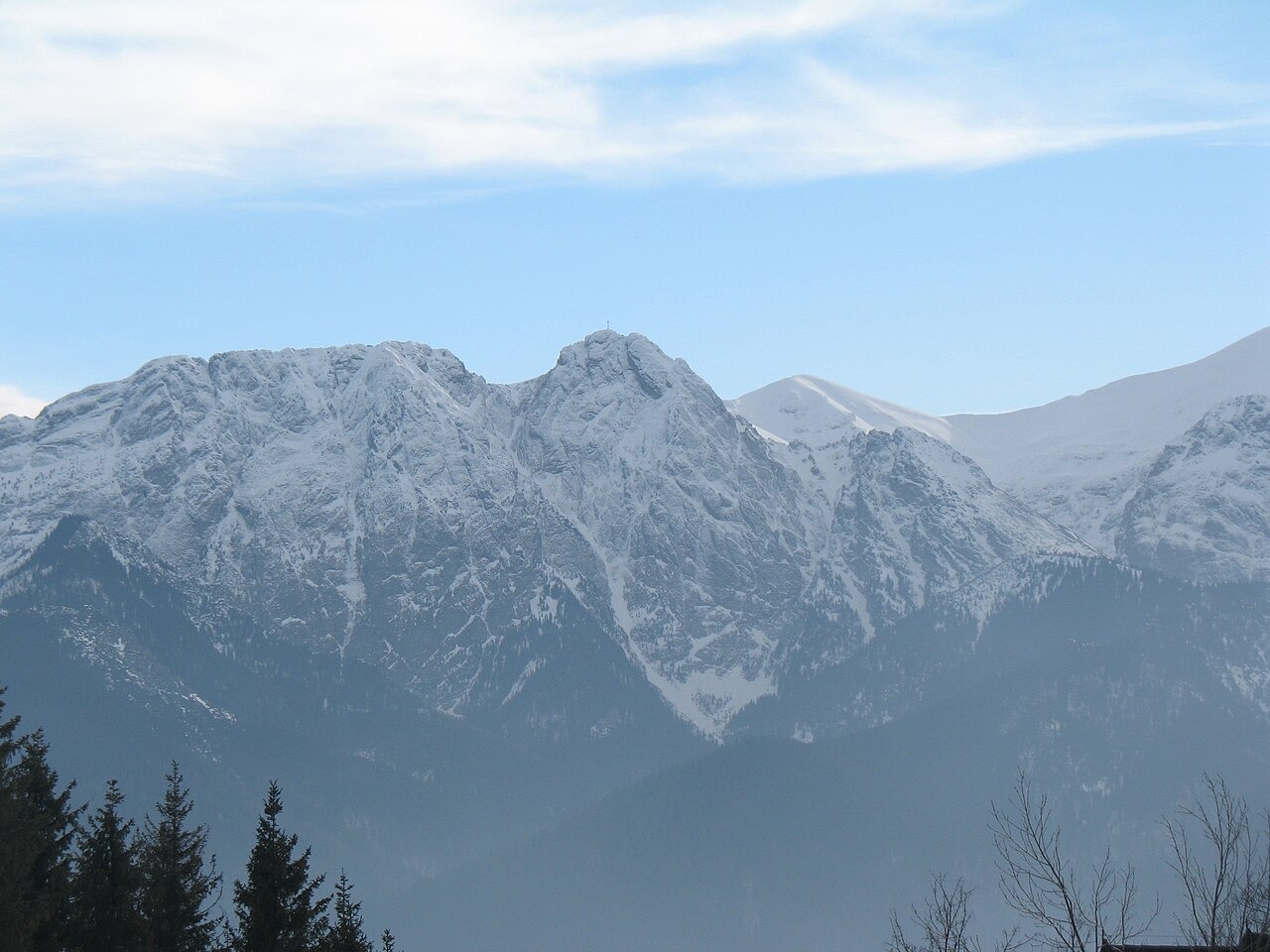
Limestone Formation
Tatra National Park field research identifies Giewont as a major limestone formation of the Western Tatras. The mountain's silhouette, produced by that north wall of pale rock, is sufficiently distinctive that it became an established visual subject. Walery Eljasz's 1900 illustrated guide, quoted in the Zakopane municipal historical account, singled out the outline as the mountain's defining characteristic, an assessment that subsequent generations of observers from the city confirmed.
The Iron Cross
The iron cross on the summit was commissioned by Zakopane parishioners together with the priest Kazimierz Kaszelewski, manufactured in Kraków, and transported to the peak in sections. Before installation, a wooden model was tested for visibility from the valley. The Zakopane heritage inventory dates the consecration to 19 August 1901.
Visual Motif
The Zakopane Centre of Native Culture's archive records a December 2023–February 2024 exhibition devoted to painted views of Giewont, documenting the mountain's sustained presence as an artistic subject. The north face remains continuously visible from Zakopane and from the ridge at Gubałówka above the city, sustaining the relationship between the summit and its urban audience that Eljasz described at the turn of the twentieth century.