
Coffee beneath the canopy
A letter from the British consulate dated 30 January 1936 describes the visit Richard Whalley had made to the Gesha area twelve days earlier. He found coffee growing under tall shade trees and described how residents dried the berries in the sun and pounded them in wooden mortars. People he spoke with recalled mule caravans buying coffee in Gesha and Gorei and carrying it to markets in Jimma and Addis Ababa.
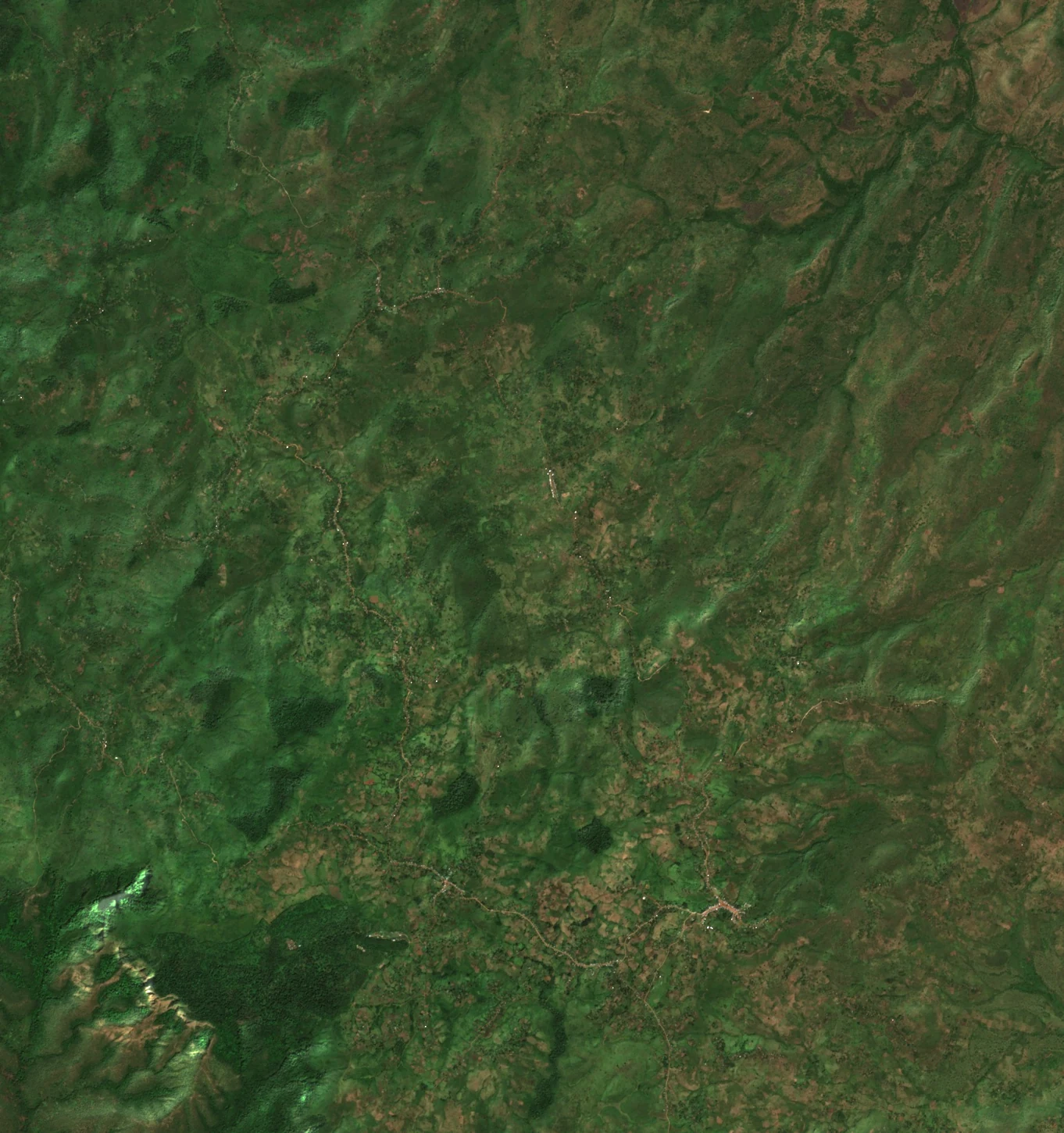
The letter put an Ethiopian post on the mountain, overlooking forest to the north. Both that approximate location and the later FAO collection area fall within the satellite image above.
Two collections, two places
On 10 December 1964 the FAO coffee mission recorded two samples obtained through local collectors. E-124 came from the forest on Gesha Mountain at about 1,830 metres. E-126 came from near Gorei, on the northeastern edge of the mountain. The US seed collection preserves their records as PI 305788 and PI 305790, respectively.
From the Ethiopian forest to Panama
World Coffee Research traces the material behind one Panamanian Geisha lineage through the Lyamungu station in Tanzania to the CATIE collection in Costa Rica, where it was registered as T2722 in 1953. The name Gesha, also written Geisha, covers several genetically distinct Ethiopian selections. In 2025, researchers published a genome for a Geisha accession, adding another way to study plants that share the name.
The mountain records preserve two different parts of this history. The letter describes people who already gathered and traded the crop. The FAO samples tie specific plants to two places on the mountain and its edge.