
Ridge Form and Karst Terrain
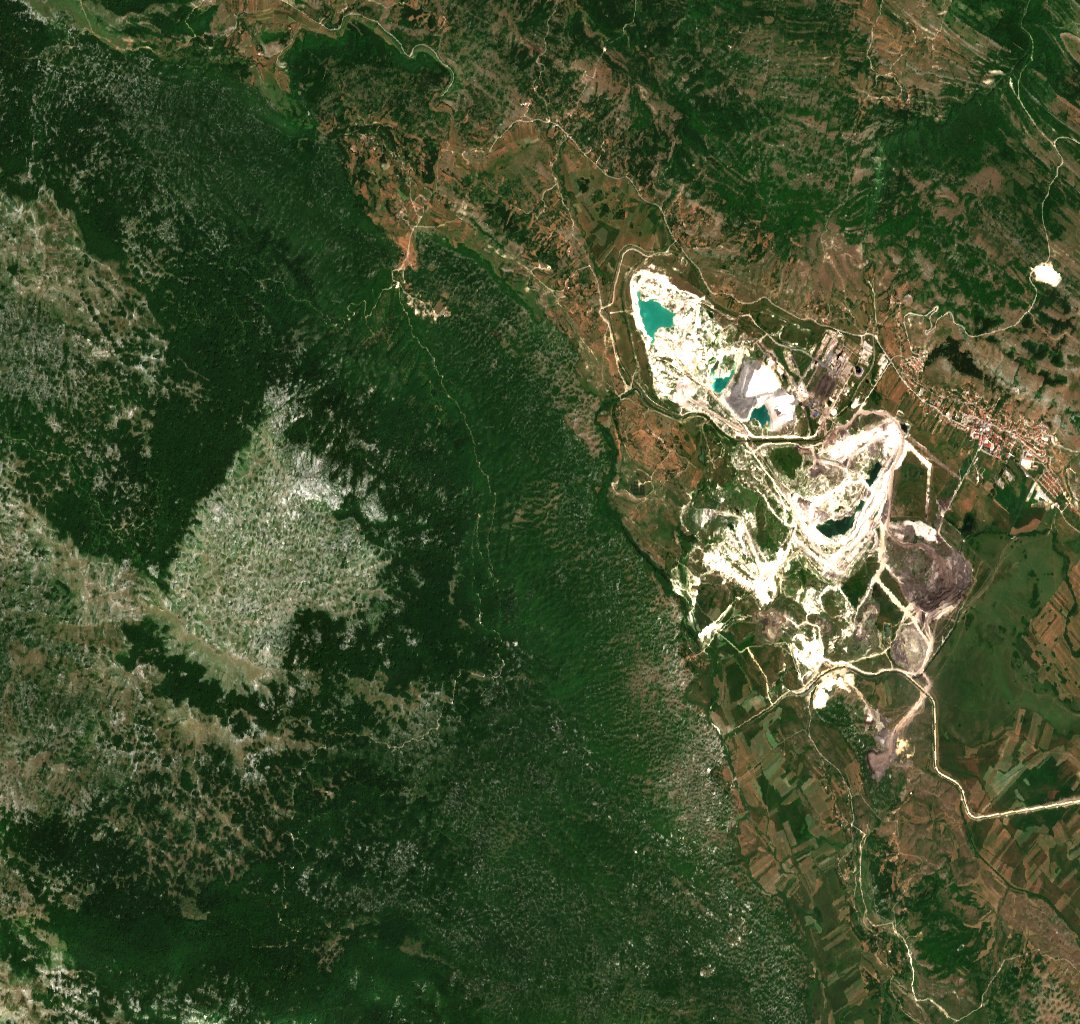
Gatačka Bjelašnica belongs to the External Dinarides, a fold-and-thrust mountain zone whose ridges run in a broadly Dinaric orientation. Geomorphologist Alen Lepirica, in a 2012 study, places ranges of this type among the linear carbonate ridges of the High Karst, characterised by rocky carbonate surfaces, sinkholes, and enclosed karst depressions. At the foot of the ridge lies Gatačko Polje. The Gacko II transboundary environmental assessment describes it as a broad, flat-bottomed karst basin filled with Neogene sediments at roughly 930 to 960 metres. In the June 2026 Sentinel-2C image, bare, pale limestone patches spread across the wooded ridge to the west, while the basin floor to the east shows the extensive pale workings of the Gacko surface mine, which the same assessment records as having materially altered the basin's surface.
Underground Drainage and Connected Basins
The 2007 Corridor Vc environmental study reports that water from the polje drains in stages toward Fatničko Polje and Dabarsko Polje, with connections extending to the Trebišnjica and Bregava springs. This stepped pattern reflects the character of Eastern Herzegovinian karst more broadly, where surface drainage disappears into fissured limestone and may travel considerable distances underground before re-emerging.
Pastoral History and the Gatačko Cattle
The high ground above Gacko has supported livestock farming across the district for well over a century. According to the Gacko Municipality's Agriculture and Rural Development Strategy 2023–2027, a livestock station was established at Gacko in 1887 and became the centre of a sustained breeding programme that crossed the indigenous Buša cattle with imported Alpine breeds, including Wipptal and later Montafon stock. The result, developed across the hilly karst terrain of the wider district, is the grey Gatačko cattle, a breed adapted to the region's rugged pastures and cold winters. A 2022 report from the University of Banja Luka's Institute of Genetic Resources describes active field inventory and genetic testing carried out as part of conservation efforts for the breed.