
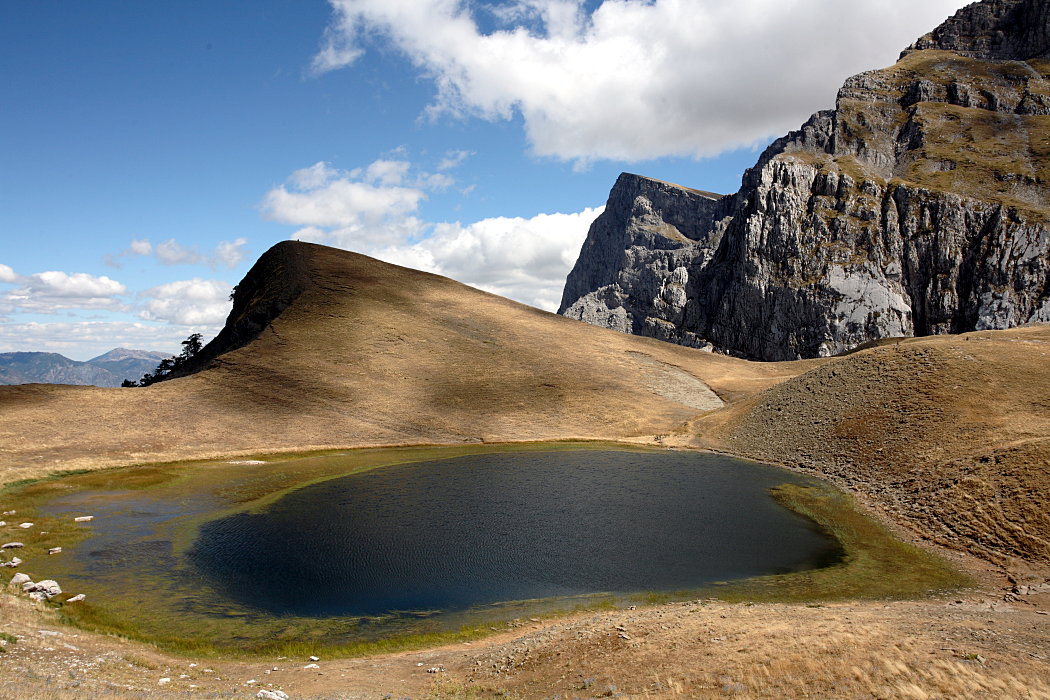
Summit and Massif
Astraka, at 2,436 metres, is a separate summit of the Tymfi massif. Drakolimni, known in English as Dragon Lake, sits at about 2,050 metres and formed as a glacial lake of the massif. Gamila II is a lower summit.
Limestone Geology and Glacial Record
The massif is built of Paleocene to Eocene crystalline limestones carrying chert bands. Rainwater and snowmelt have dissolved the rock over long periods, opening karst depressions and vertical shafts across the high terrain. Moraine deposits record former glacial activity. In 2020 Allard and colleagues dated surface limestone boulders using cosmogenic chlorine-36 exposure analysis, placing the last local glacier maximum for the massif at about 25,700 to 29,000 years ago.
Archaeology and Conservation
Hunter-gatherers occupied the Kleidi and Boila rock shelters along the Voidomatis River below Tymfi in a span documented from about 17,500 to 9,500 years ago, leaving hearth remains that in some deposits include wild-goat bones. In 2005 the Northern Pindos National Park was formed from two predecessor parks. The Vikos-Aoos Geopark, which incorporates the Tymfi massif, joined the UNESCO Global Geoparks programme in 2015.