
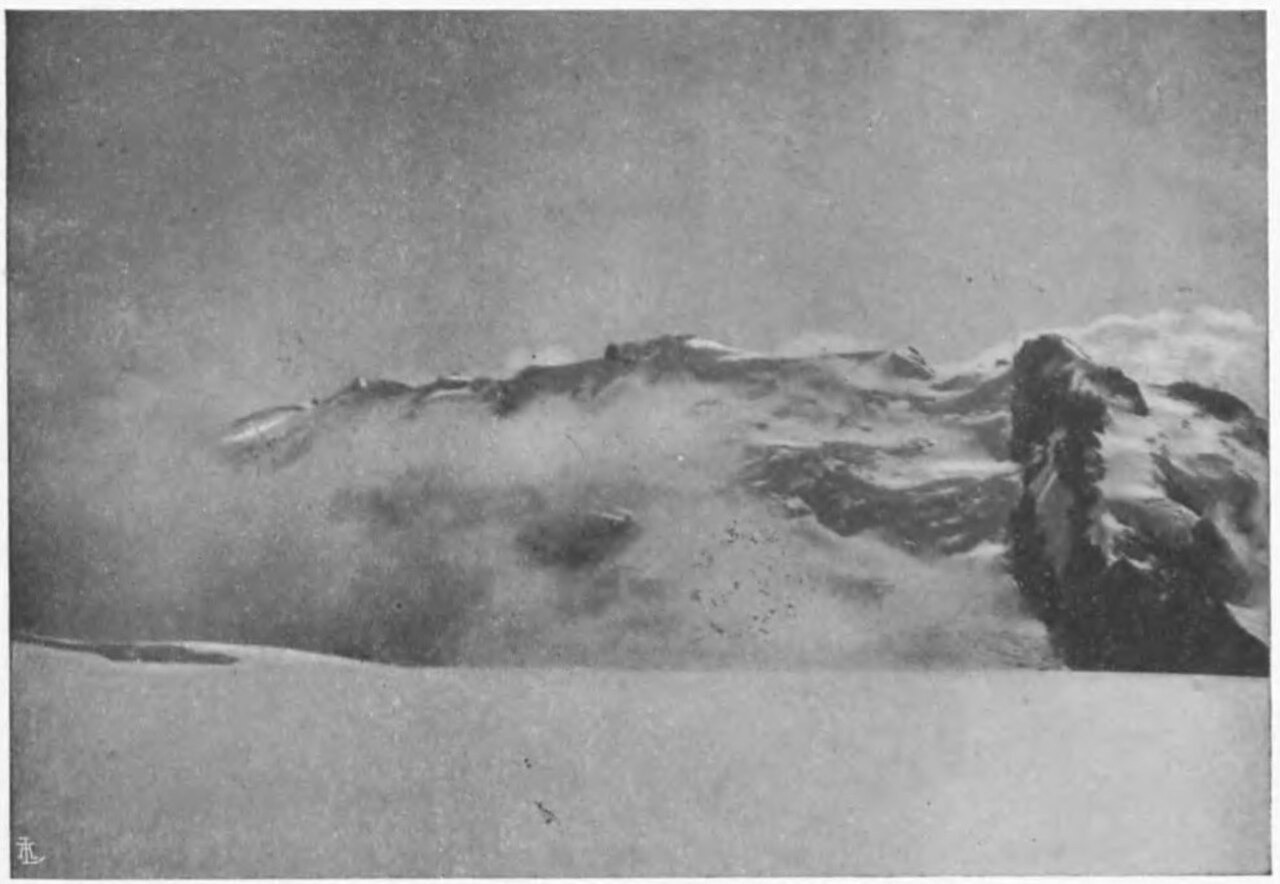
Humphreys's Attribution and the Ensonga Name
Douglas Busk, writing in the 1959 Alpine Journal, attributed the name Ensonga to Noel Humphreys, who applied it during earlier survey work on Mount Speke. Busk's account drew on both his own observations and the accumulated record of Rwenzori exploration, preserving Humphreys's local nomenclature within the range's documented toponymy.
Thompson's 1955 Theodolite Reading and Photogrammetric Assessment
In 1955, Thompson carried a theodolite to the Vittorio Emanuele summit and, from those angular readings, concluded that Ensonga appeared higher than Vittorio Emanuele. Subsequent photogrammetric work by the Directorate of Overseas Surveys assessed Ensonga's relative height as lower, a finding reflected in the UWA inventory figure of 4,865 m against Vittorio Emanuele's 4,890 m.
Grant Glacier and the Historical Ice West of Ensonga
Historical observations recorded in the Journal of Glaciology described the Grant Glacier extending into ice slopes on the western side of Ensonga, with both features understood as part of Mount Speke's summit ice cap. Those accounts document the glacier's former extent and its relationship to Ensonga's western flanks as they were observed during mid-twentieth-century field surveys.