
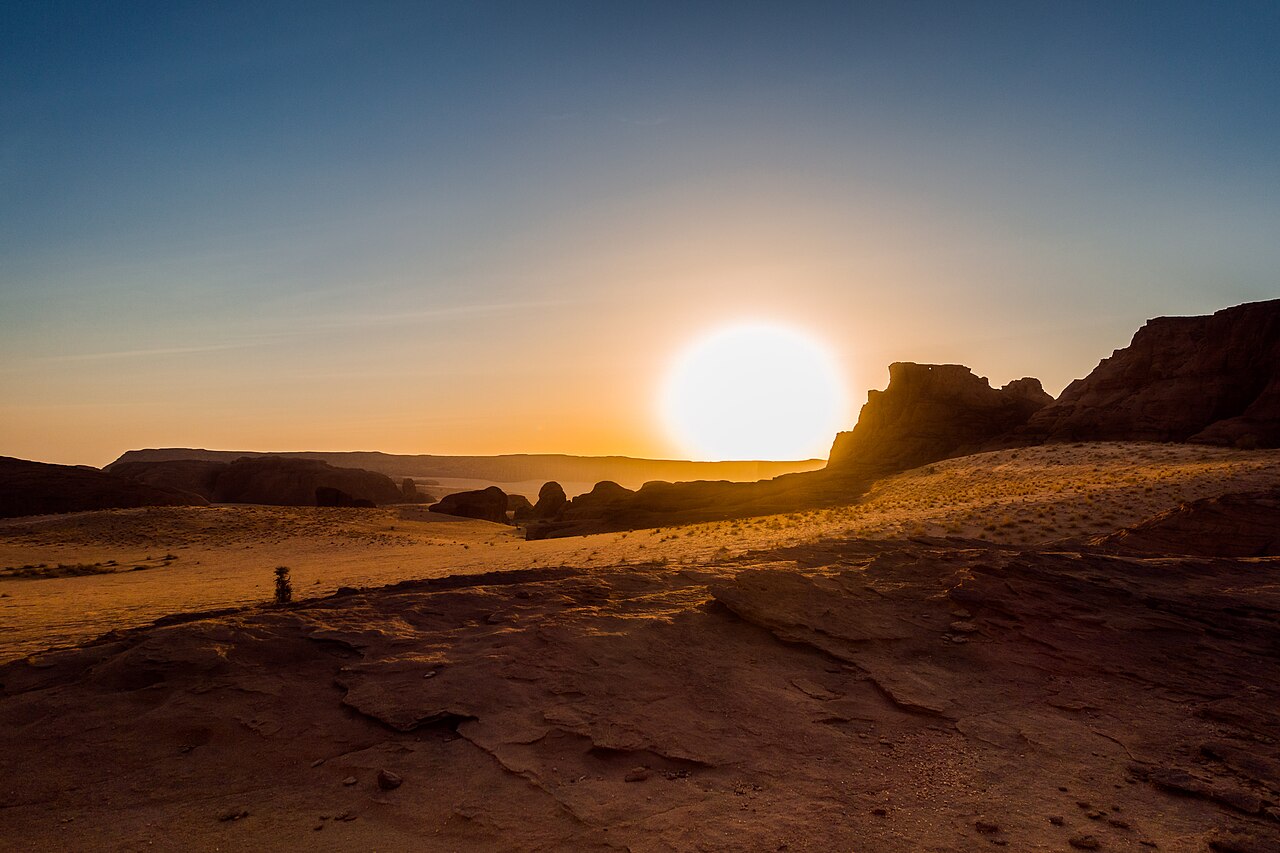
Sandstone Shaped by Water and Wind
Water and wind have sculpted the plateau's sandstone into a terrain of deep canyons, free-standing pillars, and arching spans. Some valleys cut through the upland retain permanent pools, creating sheltered corridors within an otherwise arid environment. The UNESCO nomination documents this geology as the defining physical framework of the Ennedi landscape.
Seven Thousand Years of Rock Art
Paintings and engravings cover sandstone surfaces and rock shelters throughout the massif, depicting people, wildlife, and livestock across multiple periods. The UNESCO dossier attributes occupations and artistic production at particular sites to a span of roughly seven thousand years. African Parks, working alongside Chadian authorities, continues active archaeological fieldwork that expands the documented record of these sites.
A Mixed World Heritage Inscription
The World Heritage Committee inscribed the Ennedi Massif in 2016 under criteria recognising both its natural landscape and its cultural heritage, one of a relatively small number of mixed inscriptions on the World Heritage List. African Parks manages conservation operations in partnership with the Government of Chad, supporting ongoing research and the protection of the plateau's geological and archaeological resources.