
Two Rock Histories
The Maroon Formation, the red clastic sedimentary rock exposed prominently around Maroon Peak, accumulated as stream, fan, and floodplain debris shed from the ancestral Uncompahgre highland during the late Pennsylvanian and early Permian periods, approximately 300 million years ago. USGS research reports the formation reaches up to 3,200 meters thick in the Aspen quadrangle.
Granodiorite intrusive plutons in the Snowmass and White Rock areas formed approximately 30 to 35 million years ago as magma cooled slowly within the crust, producing pale crystalline rock distinct in age, origin, and surface character from the red sedimentary terrain. The two units exist as large separate masses, each with its own geological history.
Ice and Landform
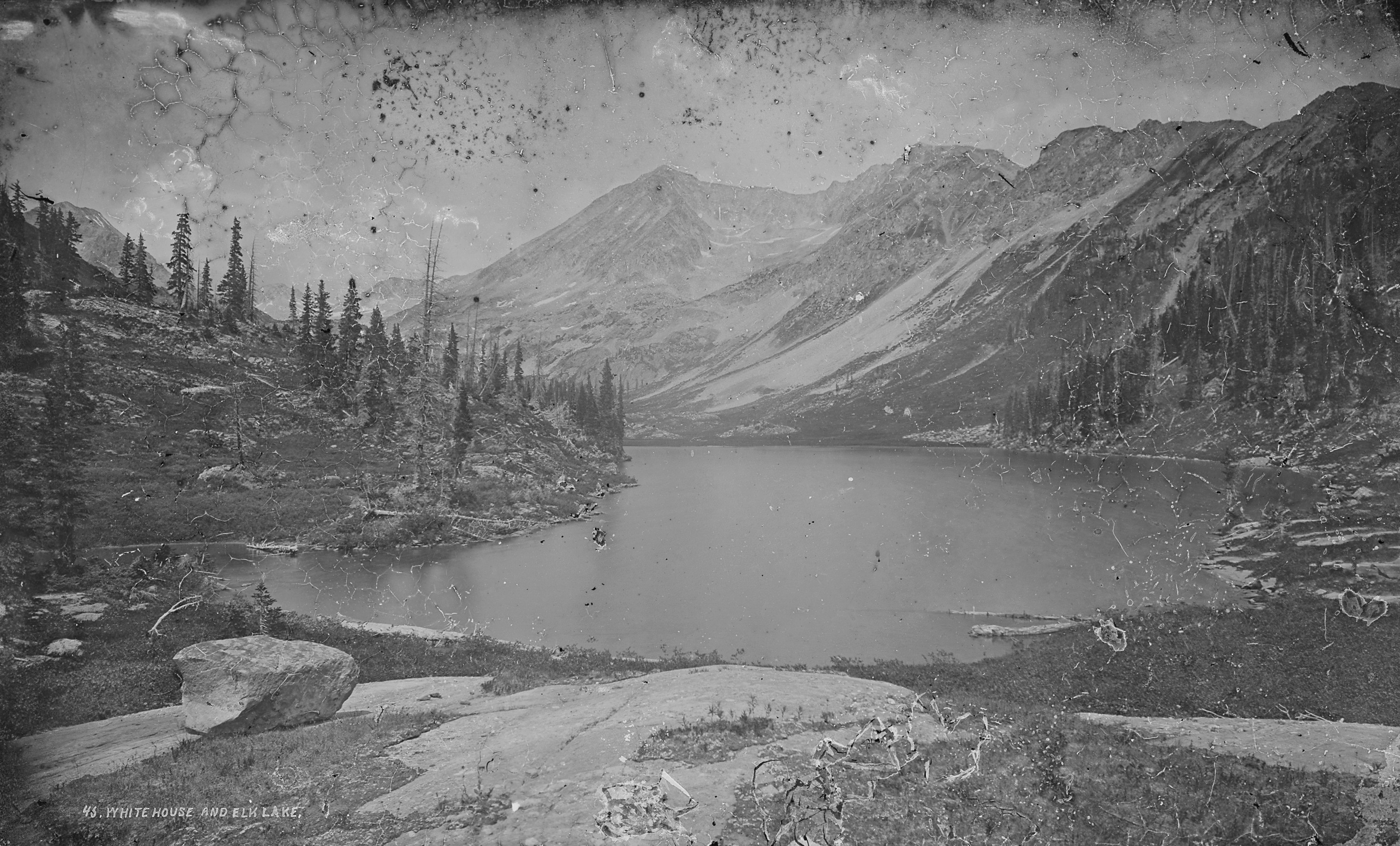
Regional Pleistocene glaciation carved bowl-shaped cirques and broad valleys across the range. Retreating ice left lakes in many of these basins. William Henry Jackson, the photographer assigned to the 1873 Hayden Survey, made panoramic exposures from White Rock Mountain in the Elk group. His expedition catalogue records a plate titled White House and Elk Lake from that season, documenting the ice-shaped basin scenery. The Hayden Survey maps were published in 1877.
Ute Homeland and Mining Settlement
The Elk Mountains were Ute territory long before any federal survey entered the region. Around 1880, prospectors established a silver mining settlement at upper Castle Creek, initially called Castle Forks City. In 1881, US federal authorities forcibly displaced Ute bands from western Colorado to reservations under 1880 legislation. The settlement formally adopted the name Ashcroft in 1882 per its National Register nomination. Before rail reached the region, daily stagecoaches ran over Maroon Pass from Crested Butte and down Maroon Creek to Aspen, as recorded in USGS survey materials. Many residents later moved to Aspen as its mines prospered. During the Second World War the 10th Mountain Division conducted training exercises near Ashcroft. Ashcroft was listed on the National Register of Historic Places on May 12, 1975.
Wilderness Designation
The Wilderness Act of 1964 established the Maroon Bells–Snowmass Wilderness, protecting the Maroon Bells and Snowmass Mountain area of the Elk Mountains.