
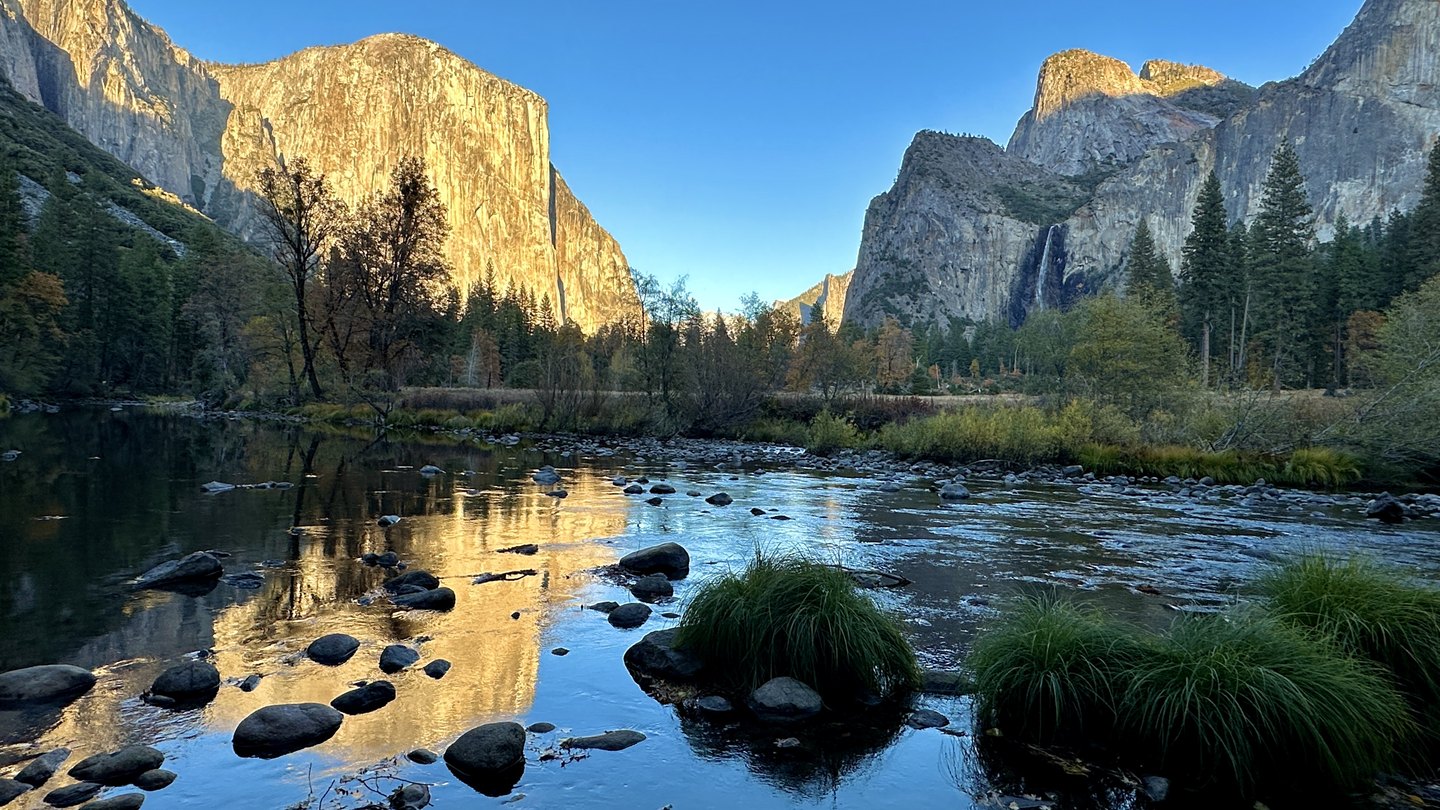
Rock and Relief
The wall exposes El Capitan Granite at the type locality of that named rock unit, meaning this is the site against which the formation is defined geologically. The National Park Service describes a cliff face of approximately 3,000 feet, about 900 meters from base to rim. Ice cut and widened Yosemite Valley over successive glacial periods, exposing the walls on either side. The USGS notes that El Capitan Granite formed through multiple phases of intrusion, so no single precise age applies uniformly to the mass.
The First Ascent of the Nose
In November 1958, Warren Harding, Wayne Merry, and George Whitmore completed the first ascent of the Nose, the central prow of El Capitan's southwest face. Harding's account records 45 climbing days accumulated across roughly 18 months, with Mark Powell and Bill Feuerer participating in attempts that began in 1957. This was the first ascent of that specific route, not the first time anyone had reached the El Capitan summit.
Lynn Hill and Free Climbing the Nose
In 1993, Lynn Hill made the first free ascent of the Nose, using only hands and feet for upward progress while rope and equipment remained available to arrest a fall. Hill returned in 1994 and completed a free ascent of the Nose in a single day.