
Limestone Karst and the Cetina Headwaters
Dinara is built from carbonate limestone, and karst dissolution across the massif has produced dolines and cave systems at every scale. The steep southwestern rock face rises sharply above the Dalmatian plain, making the mountain a prominent landmark from Knin and the surrounding lowlands. The Cetina river has its headwaters and upper reaches within the massif, and protection of that catchment was among the stated purposes when Croatia established Dinara Nature Park in 2021.
Butterfly Survey from Knin to Sinjal
Between 2005 and 2012, Tvrtković and colleagues conducted field surveys along an elevation transect from Knin to the Sinjal summit. A 2012 paper reporting on that work recorded 116 butterfly species across the transect, of which 23 were newly documented for the Dinara area. The survey found both Alpine and Mediterranean mountainous elements represented, with the Mediterranean mountainous component the more numerous in those findings.
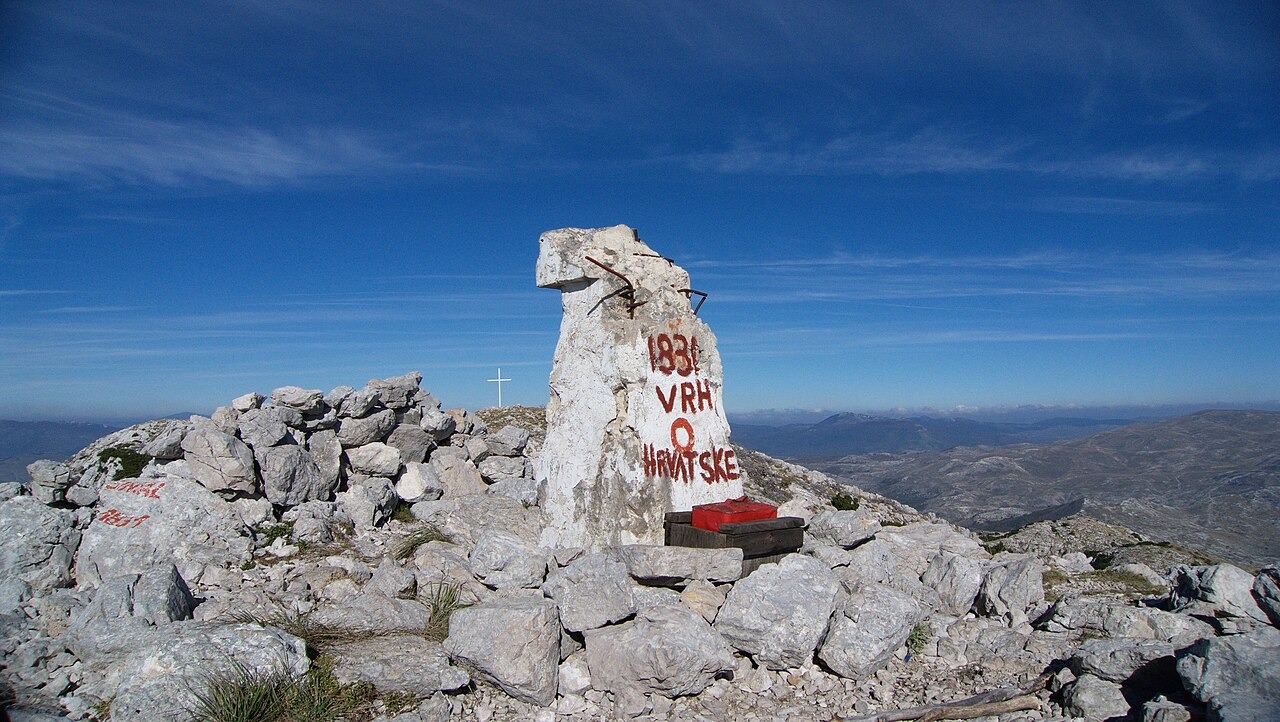
The Sinjal Summit Marker and Its Names
The Croatian Geological Society has connected the local name Sinjal to a surveying marker placed on the summit during the Habsburg era, when trigonometric stations were established across the region as part of systematic cartographic work. Multiple naming conventions apply to the massif, and the official Croatian mountaineering circuit records both Dinara and Sinjal in its 2024 guide, treating the two names as belonging to the same summit point.