
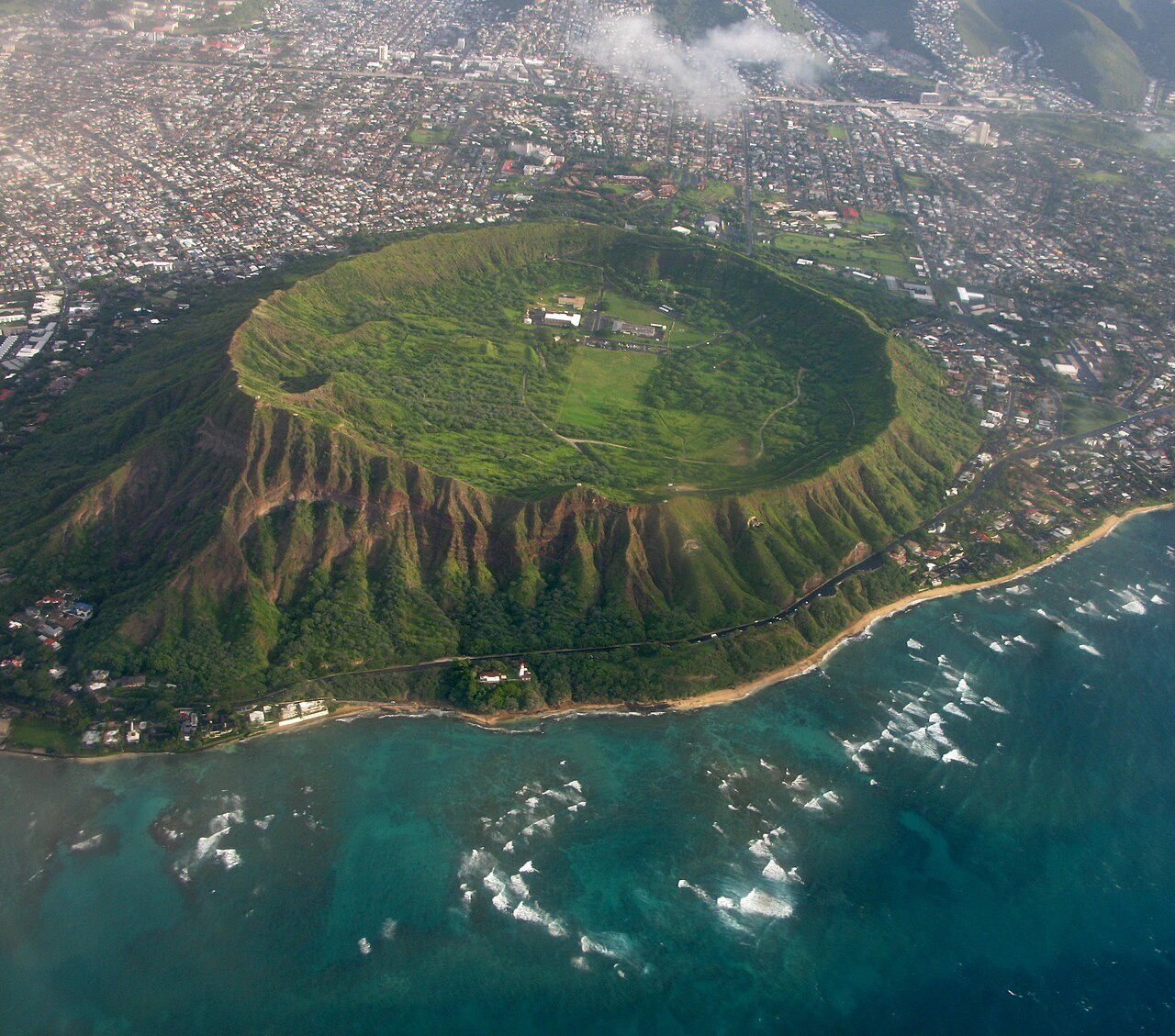
A Crater Formed in Fire and Ash
Diamond Head is a saucer-shaped tuff cone produced by explosive volcanic activity around 300,000 years ago, according to the Hawaiʻi Division of State Parks. Erupted ash compacted into tuff, forming the crater's pale, layered walls. The rim's high point reaches 232 metres, while the crater floor lies well below the outer coastal overlooks.
The 1908 Summit Trail
The trail ascending to the rim was constructed in 1908 as part of a coastal defence network protecting the approaches to Honolulu Harbour. The United States Army recognised that the southern rim offered unobstructed sightlines across Oʻahu's south coast, making the high point a logical node for directing artillery batteries positioned outside the crater.
The 1911 Fire-Control Station
By 1911 a fire-control station had been completed on the summit to coordinate artillery batteries — not to observe wildfires. The deliberate separation of observation post from weapons explains why the rim and crater floor served distinct roles: commanding south-coast views concentrated on the outer high points, while the sheltered interior held separate installations.