
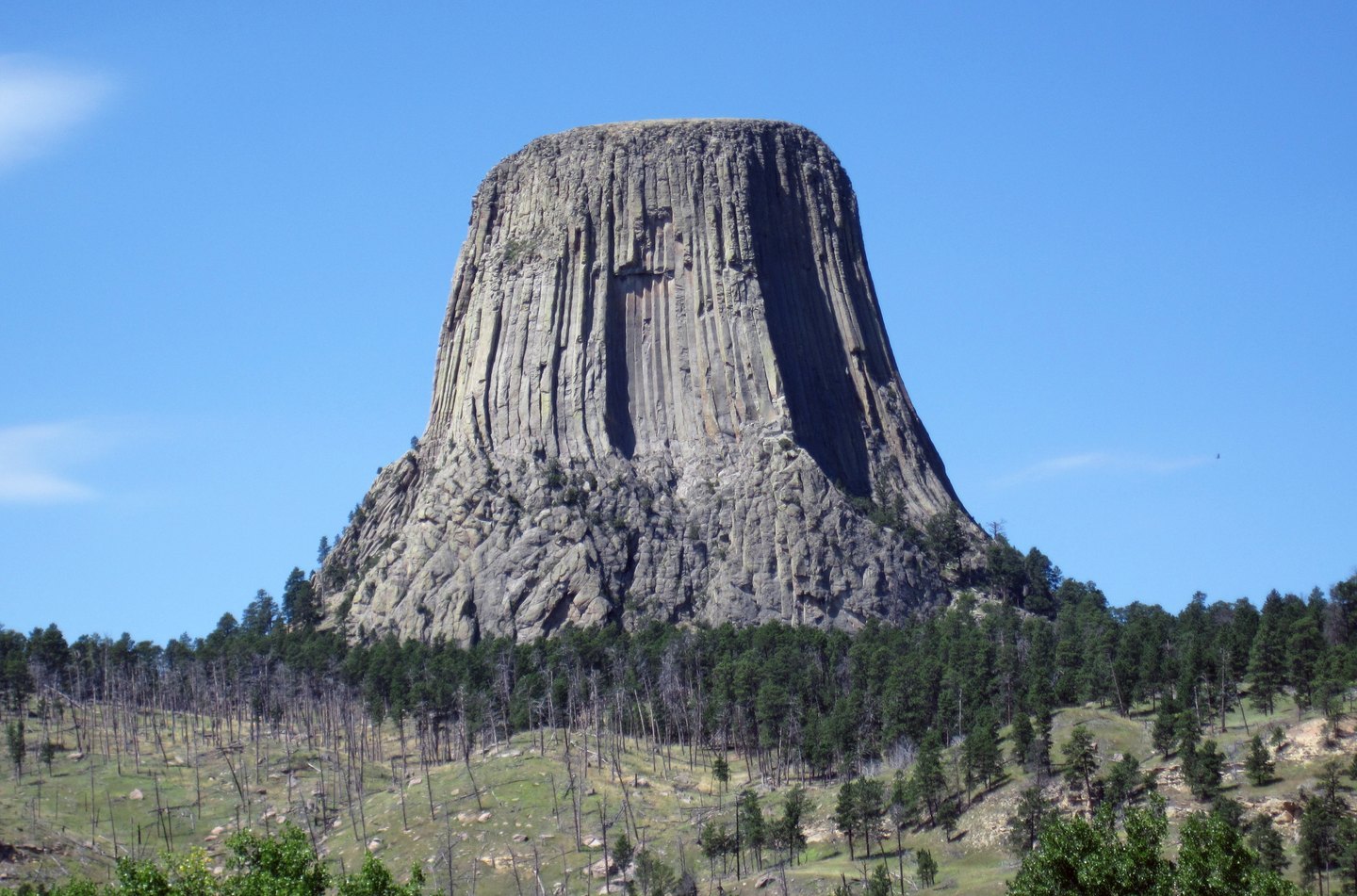
Geology of the Columns
The National Park Service describes the tower as formed from magma that solidified underground approximately 50 million years ago. As the rock cooled, contraction fractured it into vertical columns that define the butte's silhouette. Prolonged erosion removed much of the surrounding sedimentary rock, leaving the harder igneous mass standing above the river valley. The precise mechanism of the original magma emplacement is not established.
Indigenous Names and the Printed Record
Several Indigenous peoples have their own names for the formation. The Lakota name Mato Tipila, often translated as Bear Lodge, appears on maps as early as 1857, according to the National Park Service. The name Devils Tower entered the printed record through Richard Irving Dodge's 1875 expedition and subsequent writing. How that name came to compete with or replace earlier ones is not settled, and accounts of a deliberate renaming or translation error have not been conclusively verified.
Ladder, Rope, and Monument
Two documented ascents mark distinct periods in the tower's history. In 1893, a wooden ladder was used to reach the summit. The first documented technical climb came in 1937. Between those two ascents, a 1906 presidential proclamation designated Devils Tower as the first United States national monument under the Antiquities Act.