
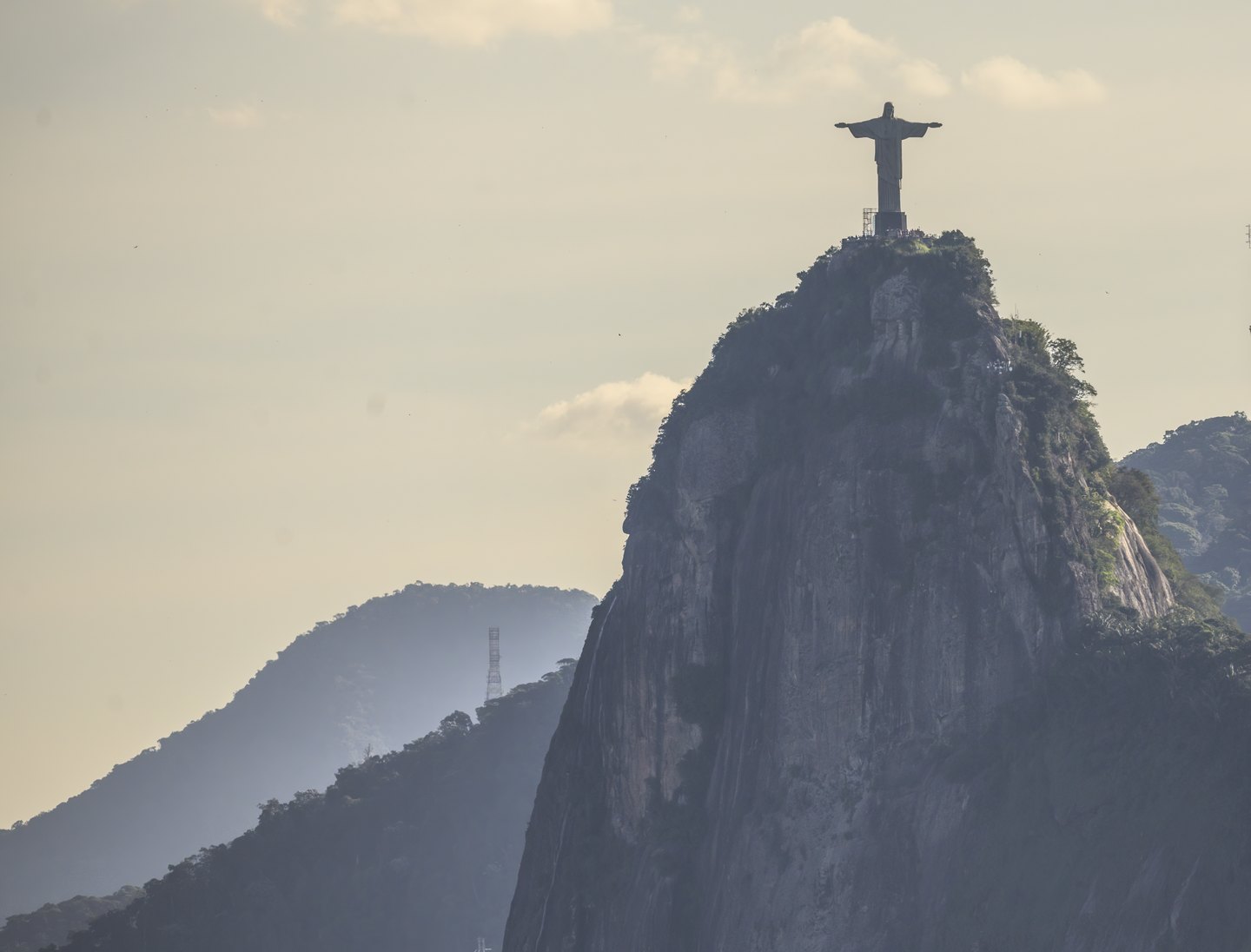
The peak and the statue
Christ the Redeemer, at the summit of Corcovado, was inaugurated on 12 October 1931. The architectural project was led by the engineer Heitor da Silva Costa. Tourism sources indicate that the 38-metre measurement includes the pedestal, so any reference to the statue's height must distinguish between the sculpture itself and its base.
The existence of the railway predates the statue by nearly half a century: the Corcovado train entered service in 1884, when the summit still had no monumental structure. The basic concession project for the train, prepared by ICMBio, documents this precedence and the continued operational status of the railway system as an independent means of access to the peak.
The forest and the reforestation
The National Archives holds documentation relating to a public reforestation initiative begun in 1861 in the forests of Tijuca and Paineiras. The motivation was pragmatic: agricultural expansion, timber extraction, and coffee cultivation had deforested slopes that fed Rio de Janeiro's urban water supply, threatening the city's access to water.
This history of deforestation and recovery, however, does not apply uniformly to all the vegetation of the massif. It is necessary to distinguish the areas actually subjected to nineteenth-century reforestation from the portions where vegetation cover may have followed a different trajectory. Tijuca National Park, created in 1961 under the name Parque Nacional do Rio de Janeiro and renamed in 1967, is today the institutional framework encompassing Corcovado.
Three chronologies, one mountain
Understanding Corcovado requires separating its historical layers. The forest covering its slopes has roots partly in the nineteenth-century reforestation documented by the National Archives. The railway, which has climbed since 1884, predates both the statue and the creation of the park. Christ the Redeemer, inaugurated in 1931, came decades after the railway and thirty years before the conservation unit.
Tijuca National Park, under the terms of the management plan prepared by ICMBio, is the structure that today integrates all these layers under a single administration. The confluence of urban Atlantic forest, historic railway infrastructure, and a sculptural monument of international scale makes Corcovado a singular case among peaks with a public vocation in the Americas.