
Geology and Landform
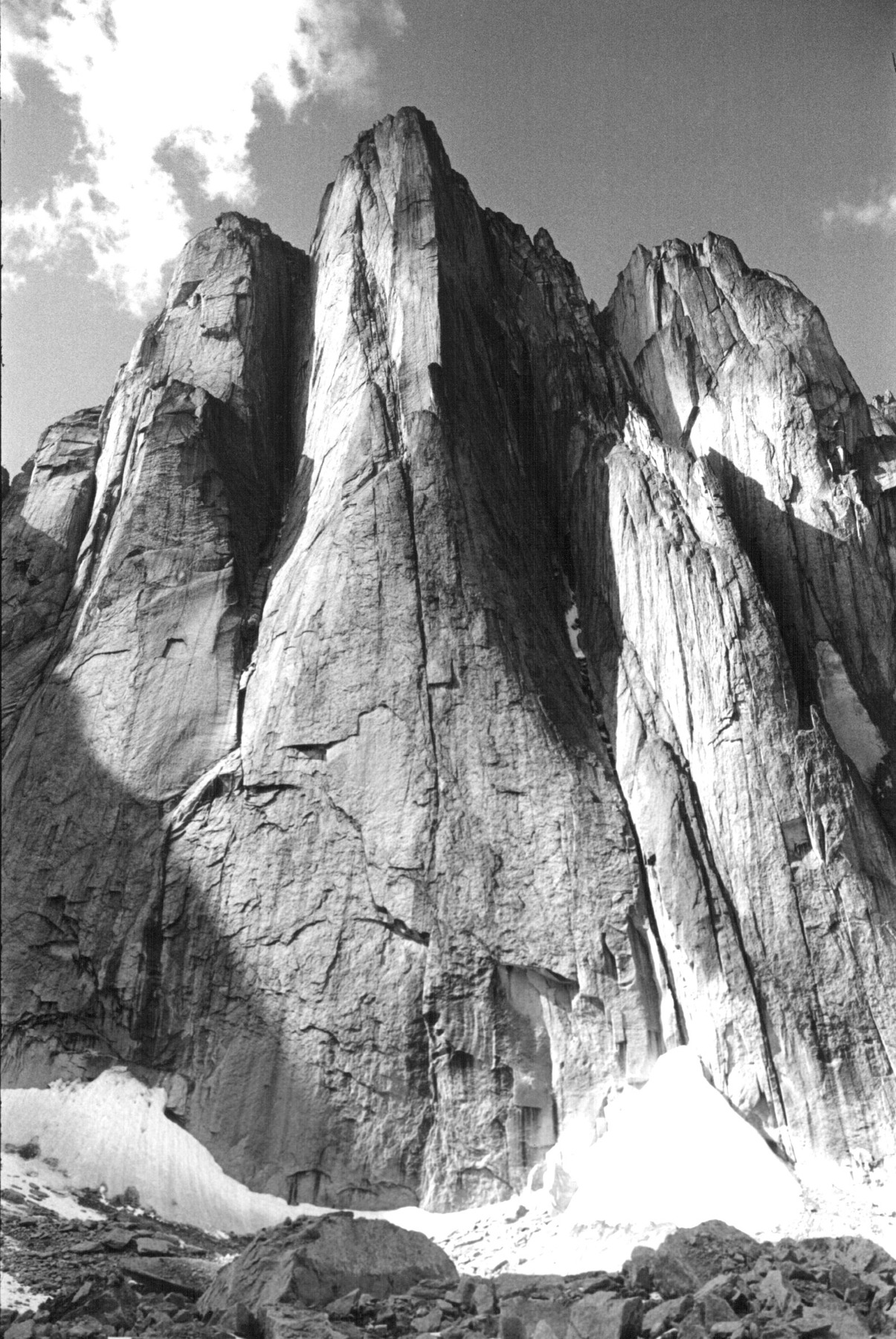
The granite of the cirque cluster is intrusive igneous rock exposed as overlying sedimentary layers eroded away. Parks Canada identifies Mount Sir James MacBrien, at 2,759 metres, as the highest summit in this group of cirques. Among the named rock spires rising from the alpine terrain is Lotus Flower Tower, whose southeast face drew several documented climbing expeditions.
Dehcho Territory and Park History
The land is the territory of the Dehcho First Nations and the Nahʔą Dehé Dene Band. Nahanni National Park Reserve was established at 4,766 square kilometres in 1976, and UNESCO inscribed the area as a World Heritage property in 1978. In 2009, with the support of the Dehcho First Nations and Nahʔą Dehé Dene Band, the national park reserve expanded to approximately 30,050 square kilometres, extending formal protection to the cirques and towers of the Ragged Range. Under a 2001 interim management arrangement, the Dehcho First Nations, Nahʔą Dehé Dene Band and Parks Canada work together through the Nahʔą Dehé Consensus Team.
Early Climbing Expeditions
Arnold Wexler led a 1955 expedition to the rock towers, making ascents that included Mount Sir James MacBrien. His account appeared in the 1956 American Alpine Journal among the records to use the label Cirque of the Unclimbables. A 1960 party documented by William J. Buckingham reached Lotus Flower Tower on July 16 via a connecting ridge and went on to summit Mount Proboscis on July 29. On August 10 to 13, 1968, Sandy Bill, Tom Frost and Jim McCarthy made the first documented ascent of the southeast face of Lotus Flower Tower. Bill's account, published in the 1969 American Alpine Journal, records it as the tower's second overall ascent and the southeast face route's first. Frost, one of the climbers, also photographed Lotus Flower Tower from Fairy Meadow during that expedition.
The Free Ascent of Lotus Flower Tower
In early August 1977, Steve Levin, Mark Robinson and Sandy Stewart completed the first all-free ascent of the southeast face route over three days. In a free ascent, the climber moves upward entirely through grip and balance on the rock, with ropes carried for protection rather than for making upward progress. As Levin's account in the 1978 American Alpine Journal describes, that standard defined the team's approach and set their climb apart from earlier ascents of the same line.