
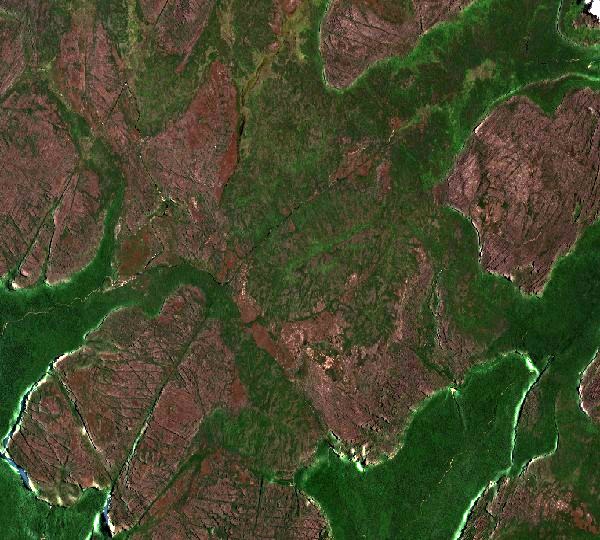
Siliceous sandstone geology
The eleven plateaus of the massif are carved from siliceous sandstones of the Matauí Formation. Fractures control the direction of weathering and erosion. Acidic water can dissolve the cement between grains and release rock particles. Researchers distinguish between the age of the rock and the still-uncertain age of the present landforms.
High-altitude peat bogs
Rain-fed peat bogs develop across the elevated surfaces of the massif.
Exploration and type locality
The Smithsonian synthesis records collections made in the area in 1953. The frog Stefania ginesi has its type locality beside the Tírica River on Chimantá-tepui. The type locality designates the site where the reference specimen that defined the species was collected, according to the American Museum of Natural History records.