
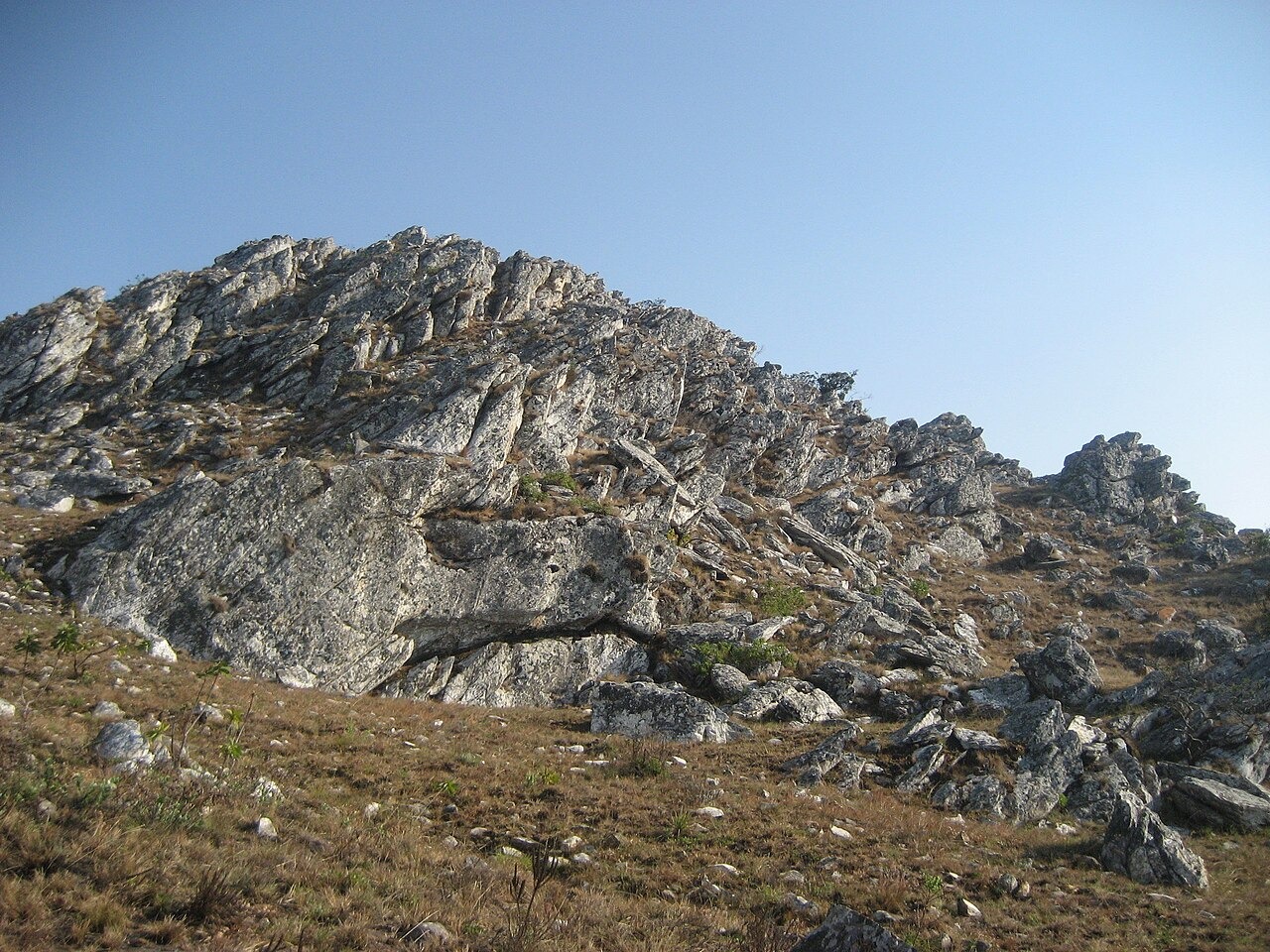
Quartzite Ridges and Substrate Diversity
Hard quartzite, produced by the metamorphism of ancient sandstones, shapes the main ridgelines and generates nutrient-poor, freely draining soils across the upper elevations. Schist outcrops interspersed through the range weather into distinctly different soils, supporting plant communities that differ markedly from those on adjacent quartzite. On the Mozambique side, quartzite exposures extend to considerably lower elevations, widening the zone of substrate-linked habitat.
Plant Inventory and Endemic Flora
Wursten and colleagues published a checklist in 2016 recording 977 vascular plant taxa within their defined survey area, drawing on fieldwork coordinated with Kew Gardens and partners across both sides of the border. The Zimbabwe World Heritage tentative list submission separately reports over 1,000 vascular species and 45 endemic taxa for its own defined scope. Both figures reflect the high botanical richness tied to quartzite substrates and altitudinal range.
Transboundary Conservation Status
Zimbabwe placed the Chimanimani Mountains on the UNESCO World Heritage tentative list in 2021, recognising the range's geological and biological significance within a cross-border context. The area forms part of the Chimanimani Transfrontier Conservation Area linking protected lands in Zimbabwe and Mozambique, an arrangement documented in the Southern African Development Community transfrontier conservation inventory. Biofund has supported ongoing botanical and biodiversity research on the Mozambique portion of the range.