
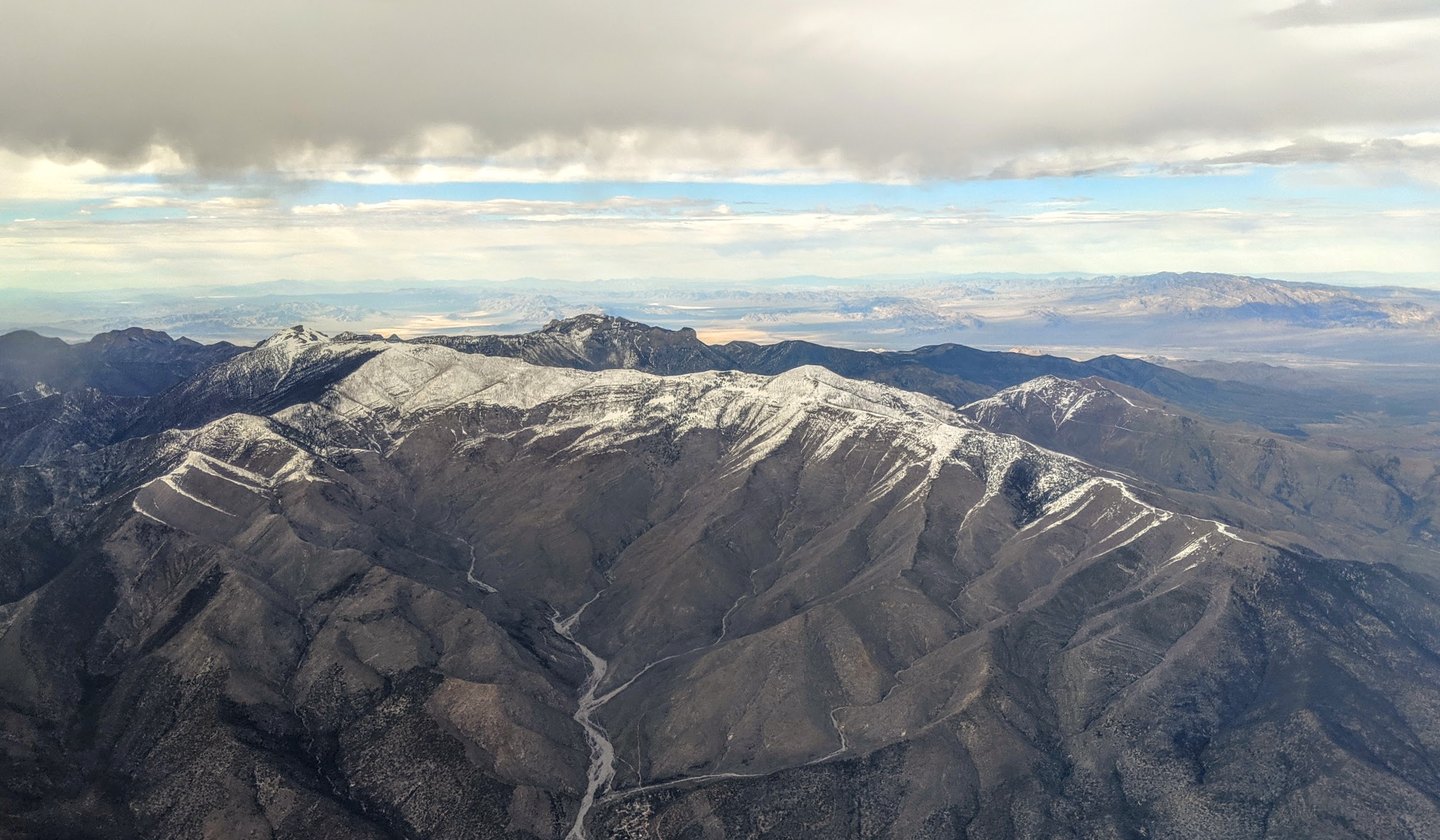
A Sky Island Above the Desert
Forest Service research documents an alpine community beginning at approximately 3,500 meters, where rocky fell-fields and moisture-collecting swales support vegetation distinct from lower mountain zones. Bristlecone pine communities occupy their own band of terrain below that threshold. The Spring Mountains intercept moisture the surrounding desert cannot, creating conditions that differ from the valleys beneath.
Nuwuvi Sacred Landscape
For Nuwuvi Southern Paiute communities, the Spring Mountains are a place of creation. An ethnographic assessment records the name Nu-vagantu in connection with Charleston Peak, and the Seven Stones Plaza at the Spring Mountains Visitor Gateway honors the seven tribes whose connections to this landscape are documented. The sacred geography these communities recognize encompasses the mountains broadly.
Wilderness Designation
The Nevada Wilderness Protection Act of 1989 designated the Mount Charleston Wilderness, providing the legal framework under which the land around the named peak has since been managed as protected terrain.