
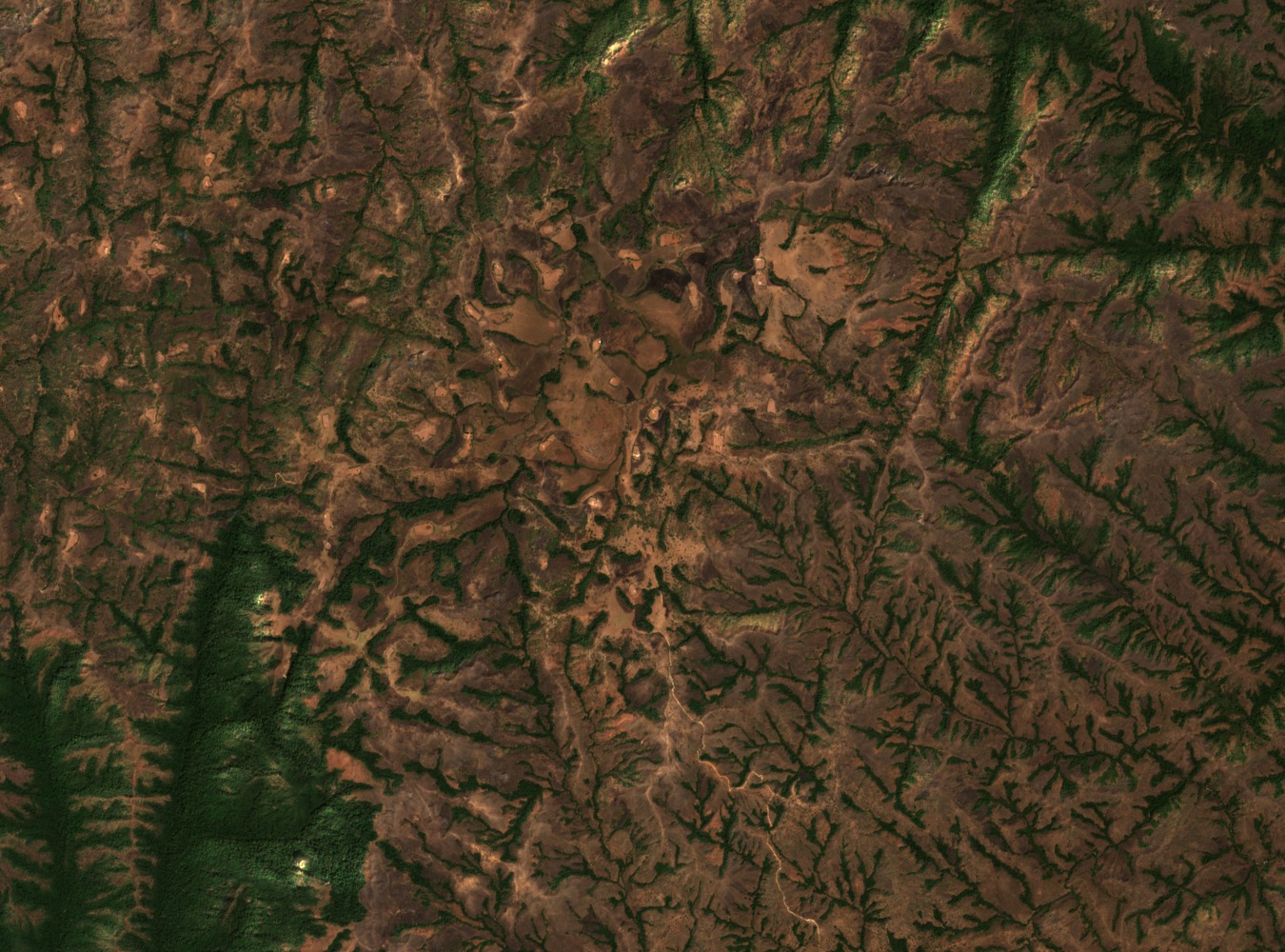
Holocene Pollen Record from the Plateau Sediments
A 2025 study published in Quaternary International analyzed pollen and microscopic remains from a sediment sequence at the plateau, extending the site's ecological record to nearly 12,000 years. The research identified warm, wet Holocene conditions associated with forest expansion across the landscape, while patches of open habitat persisted throughout the sequence, pointing to a long-lived and dynamic grassland-forest mosaic.
Gallery Forest Surveys Across Three Decades
Chapman and colleagues recorded the condition of gallery forests at study sites within the montane landscape in both 1972 and 2002, documenting changes in forest cover over that interval. The surveys, conducted across elevations of 1,670 to 1,900 metres within the study landscape, distinguish gradual long-term patterns in the grassland-forest mosaic from shifts observed across more recent decades.
Plateau Setting within Gashaka Gumti
UNESCO World Heritage volunteer documentation places the high point of Chappal Hendu at approximately 2,030 metres, positioning it among the notable elevations within Gashaka Gumti. The surrounding 28.5-square-kilometre plateau of grassland and forest sits adjacent to the Cameroon boundary and forms part of a broader highland system recognised for its ecological complexity.