
Granite, Sandstone and the Road Cut
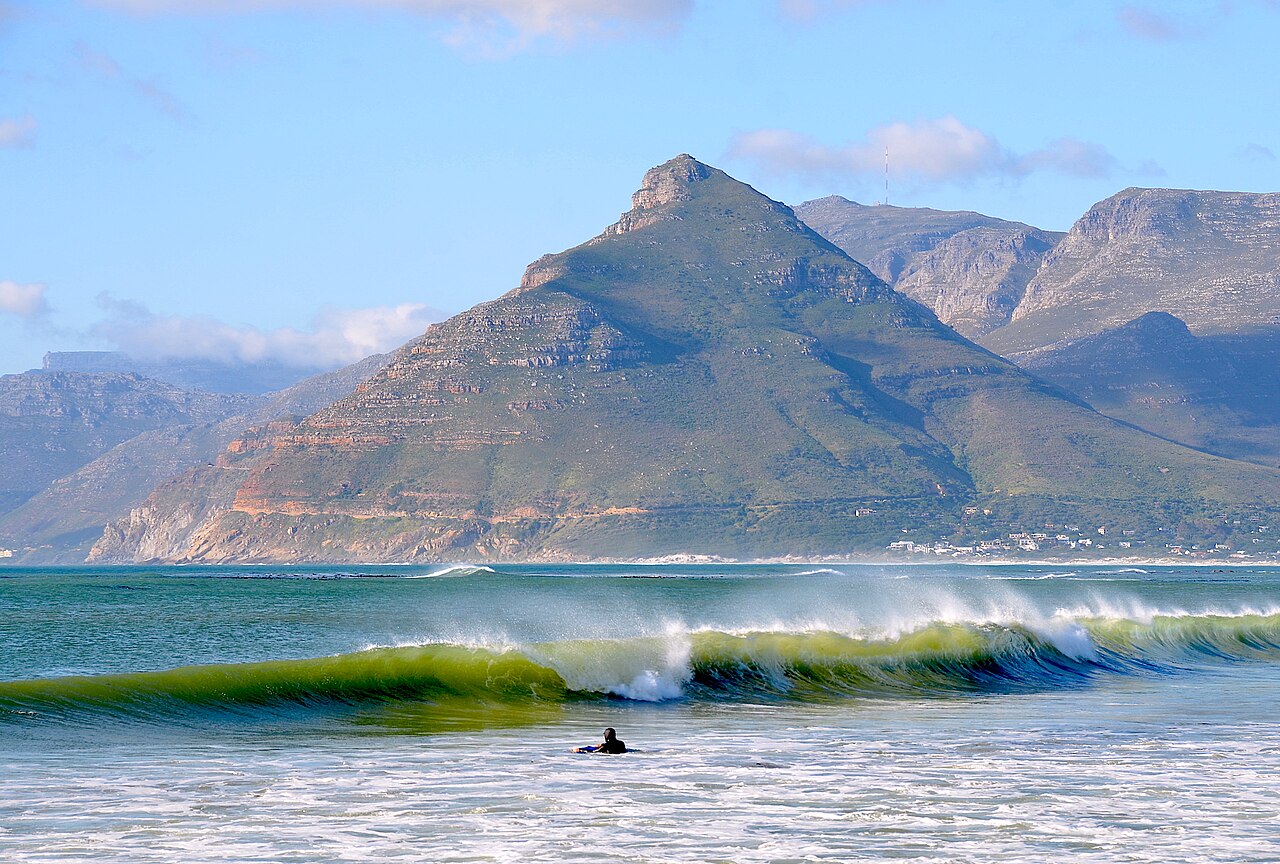
City of Cape Town and University of Cape Town sources identify the contact between Cape granite and the overlying Table Mountain sequence as the geological foundation on which Chapman's Peak Drive sits. Within that sequence, the Graafwater Formation appears in the road cuts as maroon mudstone and sandstone layers. These exposures are visible in the cliff faces above the carriageway, recording the transition from granite basement to the sedimentary units above. The position of this contact determined where the road could be cut into the mountainside, with the granite providing the lower shelf on which construction was carried out.
Construction and Convict Labour
SANParks records that Chapman's Peak Drive opened in 1922 and was built with heavy reliance on convict labour. Workers cut the route into near-vertical cliff faces along the mountain's Atlantic slope, completing a coastal link along the western Cape Peninsula. The human effort embedded in that construction is as concrete a part of the road's history as the rock it passes through.
Rockfall and Protective Structures
SANParks documentation records repeated rockfall from the cliff faces above Chapman's Peak Drive, a consequence of weathering in the interbedded sedimentary units of the Table Mountain sequence. In response, technical protective structures have been installed on the slope above the carriageway. Managing rockfall remains an ongoing engineering requirement, representing a later chapter in the road's history distinct from its construction era.