
Name and Origin
BC geographical names records connect the name to the Chaba River and record that the word chaba means beaver in the Stoney language. A. P. Coleman commemorated Job Beaver of the Stoney people in associating the name with the river and the peak. The peak and the adjacent Chaba Icefield were labelled together on the 1920 boundary survey sheet, with official adoption following in 1921.
Chaba Minor and the First Ascent of the Main Peak
A lower eastern peak carries a separate history. Jean Habel made an ascent and left a cairn there in 1901. A 1937 account in the American Alpine Journal applied the name Chaba Minor to that summit specifically to resolve the ambiguity between it and the official peak. The same account documents the autumn of 1928 as the year of the first recorded ascent of the official Chaba Peak, made by E. Schoeller and Julius Rähmi; the physical rediscovery of their cards provided the evidence linking the 1928 climb to the later historical record.
When North's party reached the lower peak in 1936, they found Habel's card stored in a round metal box on the summit.
The Chaba Icefield and Regional Glacier Study
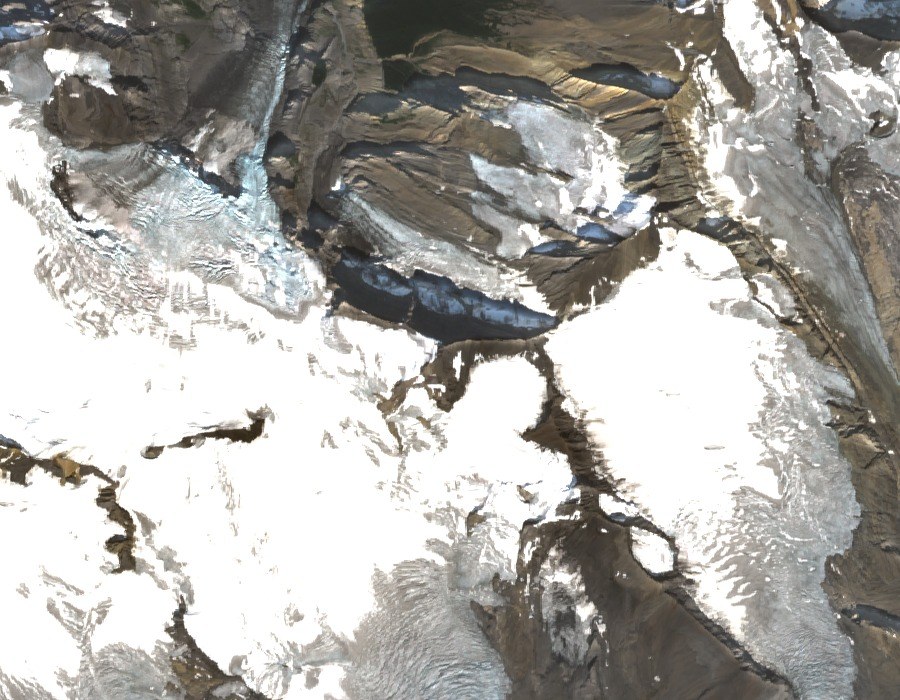
The Chaba Icefield is a separately named ice body whose glaciers flow from the crest of the divide. A regional study published in the Annals of Glaciology compared historical field notes and maps against satellite measurements across the broader Clemenceau Icefield and Chaba group, finding that rates of retreat among the Chaba glaciers varied by period. The study examined factors including hypsometry, tributary detachment, and the influence of slope and aspect.