
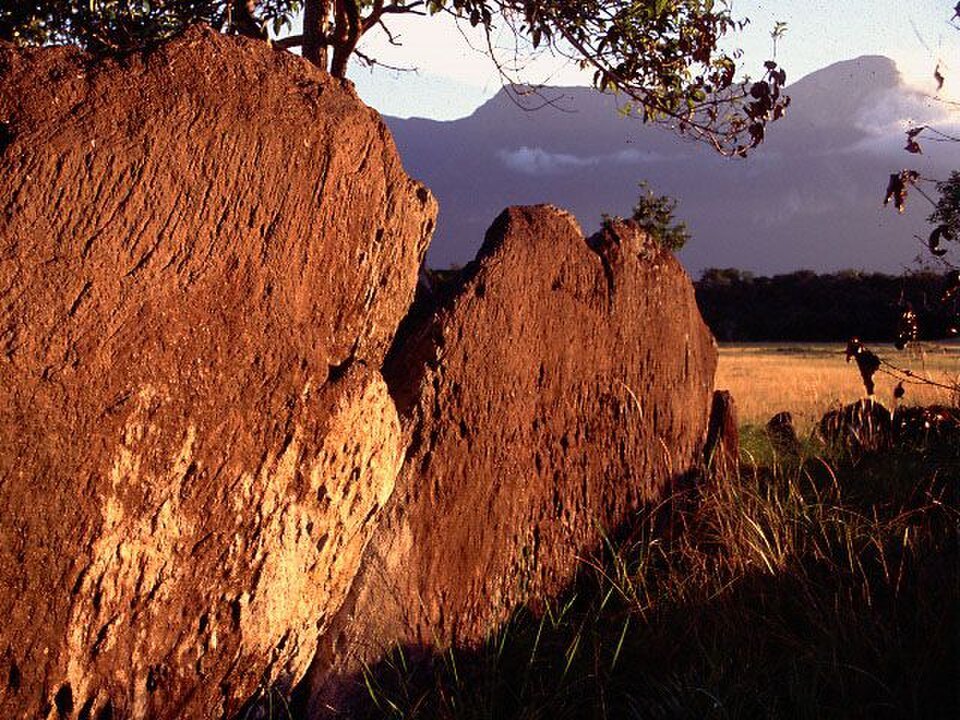
Relief and vegetation of the plateau
The highland plateau of Duida, situated at around 3°25′ N 65°40′ W, presents an extensive mesa surface with dense hard-leaved scrubland, peat meadows and forest of varying height distributed across the massif, according to Smithsonian descriptions.
Scientific expeditions
Between 1928 and 1929, the American Museum of Natural History organised the Tyler–Duida expedition under the direction of George H. H. Tate, who carried out botanical and zoological collections at various elevations of the massif. In 1950, a group from the Phelps Collection returned to the area to collect birds, expanding the ornithological record for the tepui.
Endemic fauna of the Duida–Marahuaca massif
The frog Stefania goini is documented by the Smithsonian as endemic to the Duida–Marahuaca massif as a whole. Its presence is associated with this shared massif, not with either one of the two summits that comprise it.