
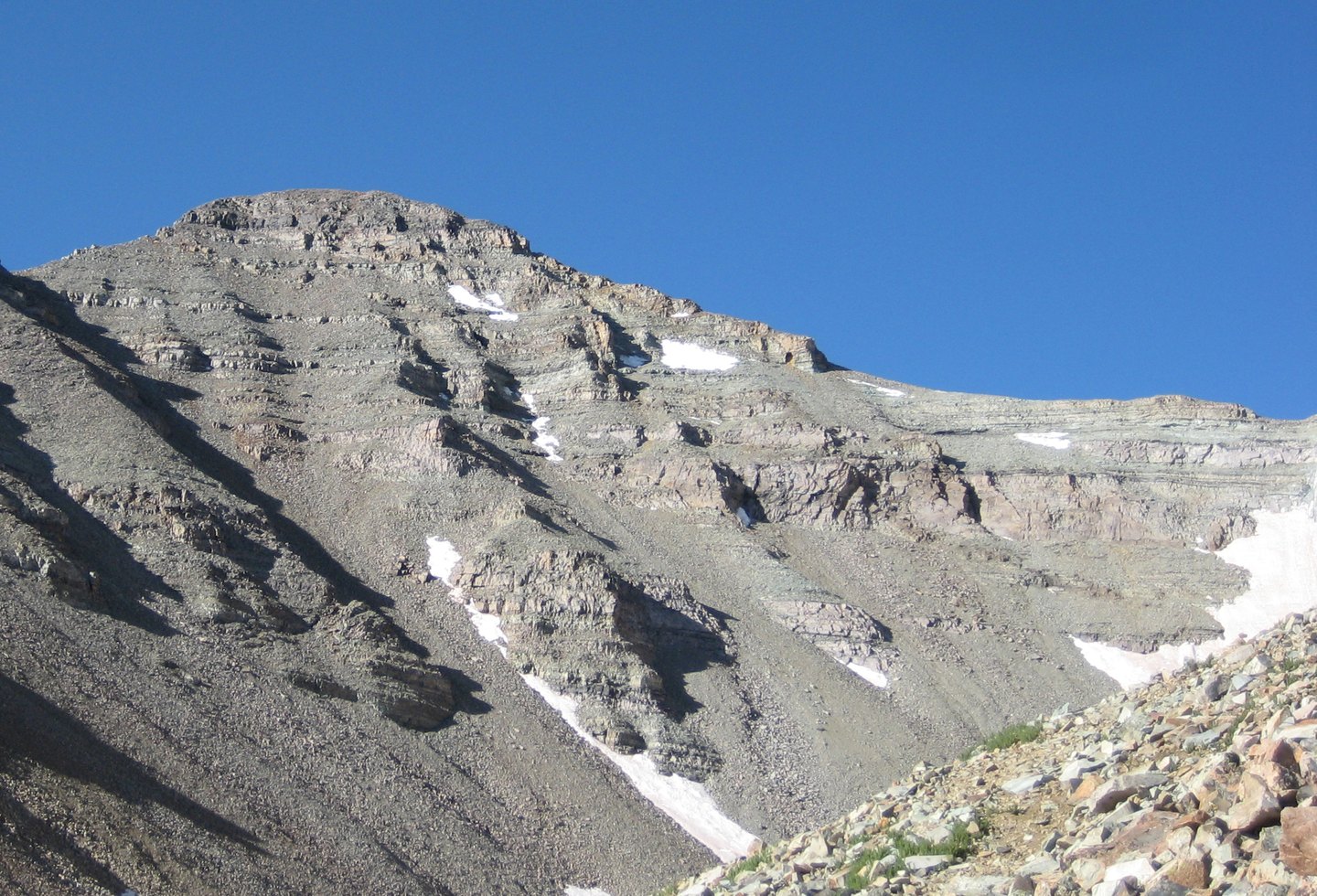
Rock Transformed by Heat
The USGS documents greenish-gray hornfels on and near Castle Peak, a rock type produced when molten intrusions heated existing sedimentary beds. This contact metamorphism is visible in Montezuma Basin, adjacent to the peak. USGS photographs taken from the mountain's shoulder show the contrasting forms of layered sedimentary rock and the more massive altered rock produced by igneous intrusion.
Montezuma Basin and Silver-Era Mining
Montezuma Basin preserves evidence of regional silver-mining history. The USGS describes a hydrothermal vein in the area once associated with the Montezuma mine, reportedly owned by silver magnate H.A.W. Tabor. Hydrothermal veins form when warm, mineral-laden groundwater circulates through rock fractures and deposits ore as it cools. The historical record does not establish that any vein ran directly beneath the Castle Peak summit.
Name and Designation
Castle Peak in the Elk Mountains is unrelated to the Castle Peak Wilderness Study Area, a separate designation in a different part of Colorado. The two share only a name.