
The West Face and Its Amphitheatre
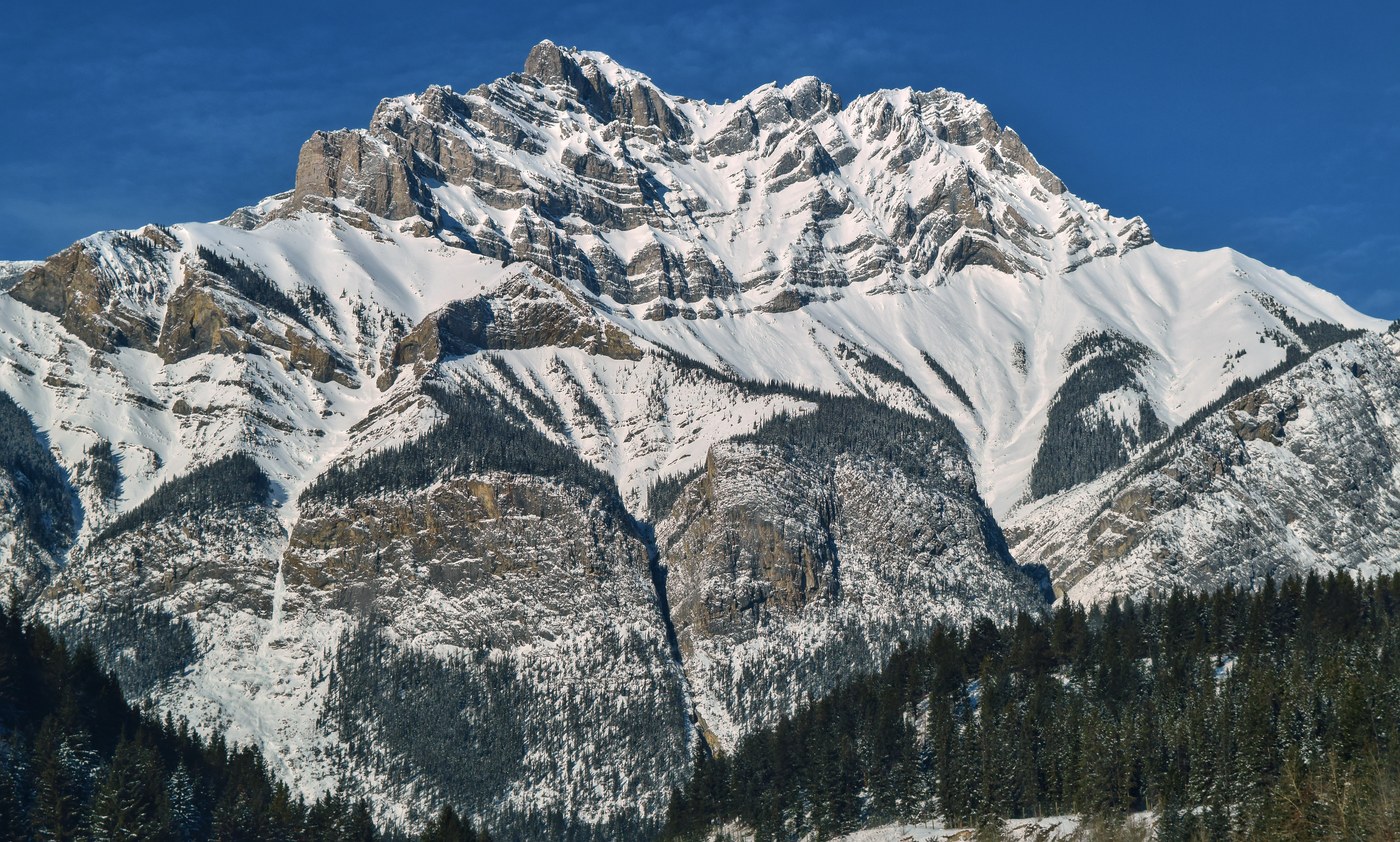
The great concave basin on Cascade's west side, known as the Cascade Amphitheatre, is the mountain's most dramatic landform. Meadows and cliff bands alternate across this bowl, creating a layered terrain that sits well below the summit and constitutes its own destination. A trail leads into the amphitheatre but terminates there, stopping short of the main peak and belonging to a fundamentally different kind of travel than the scramble route above.
Elsewhere on the exposed hillside below the summit, a waterfall descends a series of narrow ledges, stepping down in stages rather than dropping freely. This feature marks the lower flanks as a zone of moving water and broken rock, distinct from the meadow basin to the west.
The Ridge and Its Summits
The route toward the 2,998-metre summit follows a ridge that presents a repeated test of orientation. First summits and false summits precede the main top, so the ridge walk demands attention to what lies ahead rather than simply following the high ground. The experience of moving through several apparent high points before reaching the actual one is a defining characteristic of the ascent.
The View from Banff Townsite
The relationship between Cascade Mountain and Banff townsite is unusually legible. The summit anchors the northeastern view from the main street, meaning the mountain functions as both a geographical boundary and a constant visual presence for residents and visitors. This directness — a named, measurable peak visible from an urban street — gives Cascade an orientation role within Banff National Park that few other summits in the range share.