
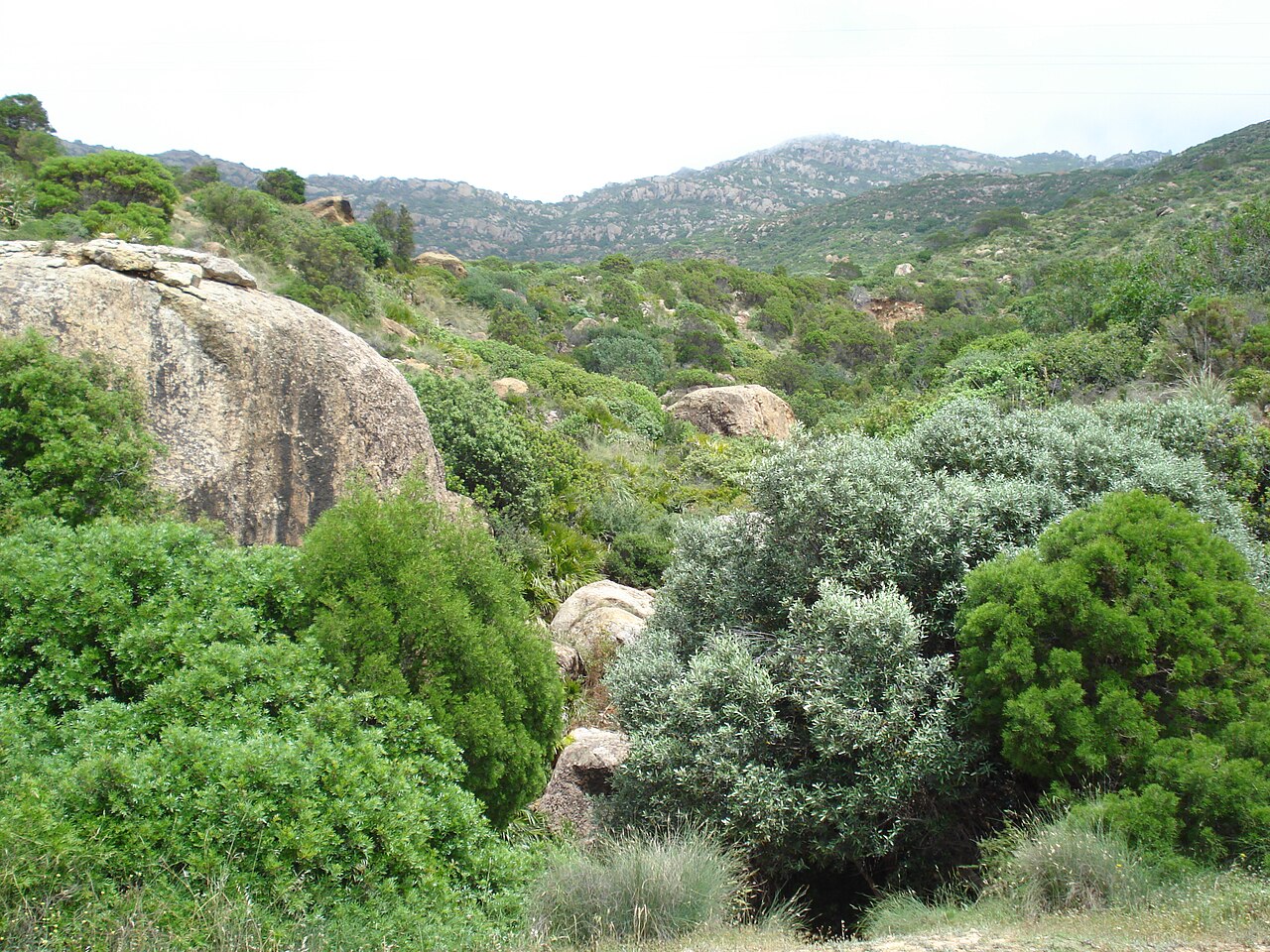
Anticline Architecture of Jebel Abderrahmane
A 1953 field report by Tunisia's National Office of Mines documented the Sidi Abderrahmane anticline as a central Eocene core encircled by progressively younger Oligocene and Miocene strata. This concentric arrangement is characteristic of eroded anticlines, where uplift brings older rock to the surface at the axis while younger beds remain on the outer limbs.
The Oued Chiba Hollow and Eocene Marl Erosion
Within the arched core of Jebel Abderrahmane, the Oued Chiba has carved an oval hollow approximately 15 by 7 km into the soft Eocene marls. Differential erosion of these weak rocks explains how a drainage basin can form at the crest of an uplifted anticline, excavating a topographic depression precisely where the strata were originally bowed highest.
Syncline Borders at Takelsa and Dakhla
The Takelsa syncline to the west and the Dakhla syncline to the east frame the hill chain and complete the structural picture of the peninsula. These flanking downfolds preserve younger sedimentary sequences alongside the exposed older rocks of the anticlines, giving the Cap Bon landscape its varied mosaic of sandstones, sands, and marls as described in IRD geomorphological surveys of northern Tunisia.