
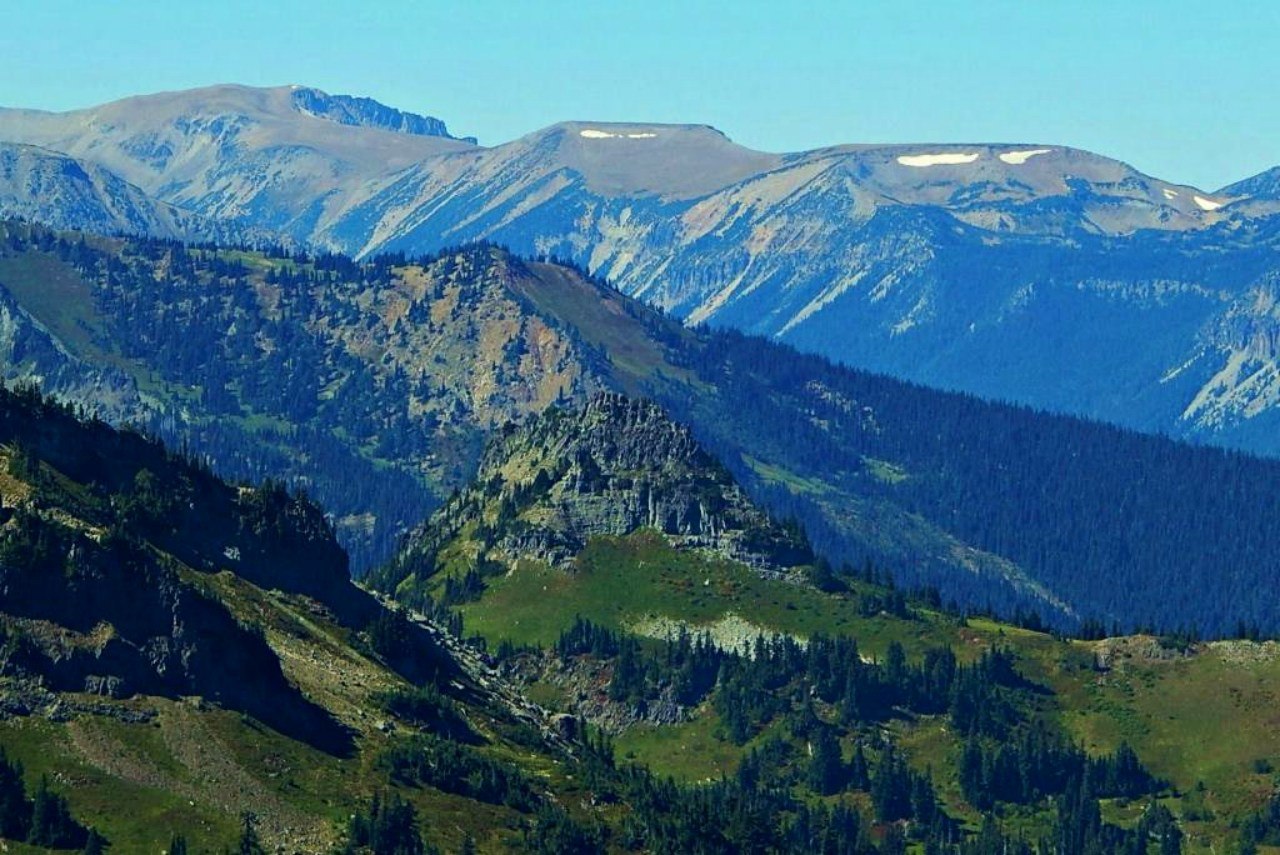
A Formation Born of Ancient Lava
The National Park Service attributes the ridge's broad, rounded character to a lava flow dating roughly 500,000 to 420,000 years ago. That eruption produced a coherent elevated mass rather than discrete summits, explaining why the three high points read as a continuous platform. Subsequent glaciation shaped but did not erase this older formation.
Alpine Tundra Above the Glacier
Shallow soils over the ancient lava support alpine tundra across all three high points. Low mountain heather and dwarf lupine are documented species on the ridge, both suited to thin substrate and a short growing season. The position directly across from Emmons Glacier keeps seasonal snowfields on the flanks well into summer.
The Legacy of John Burroughs
The ridge takes its name from John Burroughs, a naturalist whose essays on American landscapes made him one of the most widely read nature writers of the nineteenth and early twentieth centuries. The name distinguishes this ridge from many unnamed formations on Rainier's outer flanks and connects it to a tradition of literary natural history.