
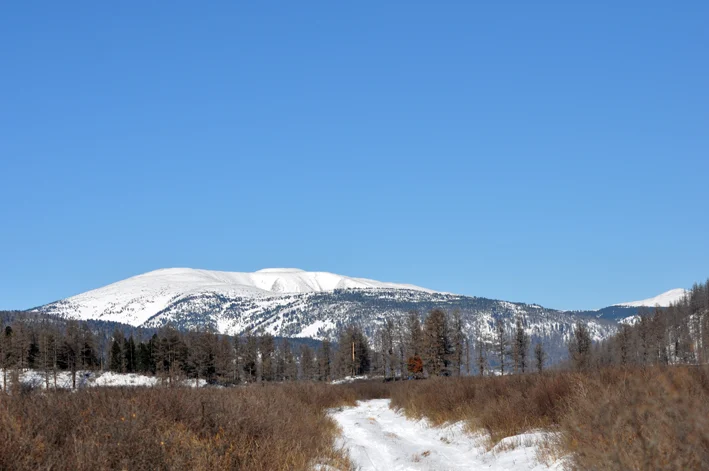
Khentii Forest and Watershed Setting
The Khentii range covers northeastern Mongolia's steppe-taiga boundary, where boreal forest extends across the uplands. Burkhan Khaldun sits on the continental divide between Arctic Ocean and Pacific watersheds. Three ovoos mark the ascent: one at Threshold Pass near the Kherlen River headwaters, one at Beliin, and one at the summit.
Chinggis Khan and The Secret History of the Mongols
The Secret History of the Mongols, the earliest literary record of Mongol origins, explicitly associates Burkhan Khaldun with Chinggis Khan. Local traditions connect the mountain to his birth and burial. The Mongolian government issued a decree on 16 May 1995 formally supporting the revival of sacred ceremonies at the site.
UNESCO World Heritage Inscription
In 2015, UNESCO inscribed Burkhan Khaldun on the World Heritage List under the title Great Burkhan Khaldun, encompassing the mountain and its surrounding sacred landscape. ICOMOS evaluated the site as a cultural landscape where steppe-taiga geography and ceremonial traditions form inseparable components, with the 1995 state decree establishing the legal foundation for that designation.