
Phreatomagmatic Origin and Crater Lake Deposits
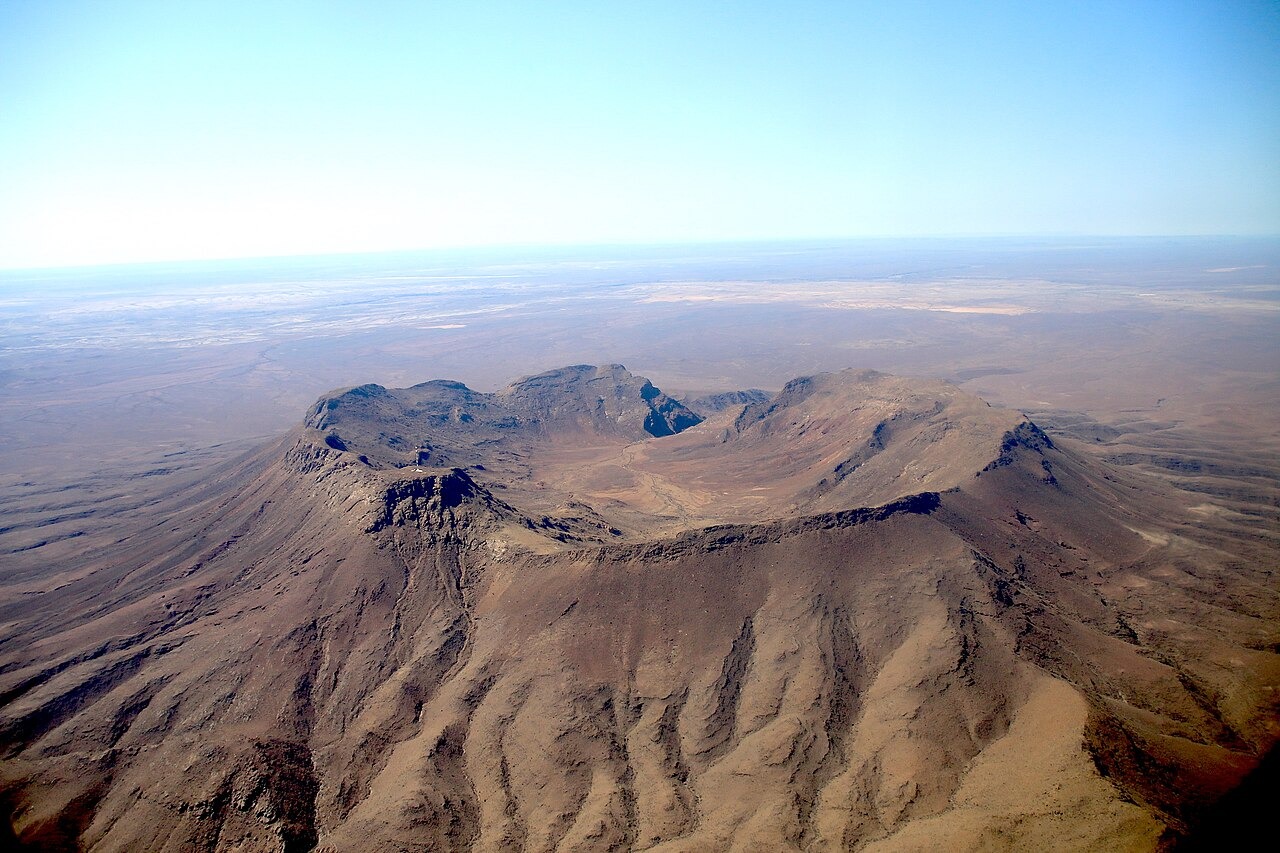
According to the Geological Survey of Namibia, explosive episodes produced a crater into which a lake subsequently accumulated sediments. Those crater lake deposits proved more resistant to erosion than the surrounding volcanic rocks, so as the outer flanks weathered over geological time the consolidated interior material was retained, forming the elevated rim and inner walls that define the mountain's profile today.
Crater Geology and Rock Diversity
The Geological Survey's volcanological study of the Gross Brukkaros field documents a range of rock types across the structure, reflecting distinct phases of activity rather than a single uniform eruption. Diatreme breccias, tuffs, and later intrusive bodies are distributed across different parts of the flanks and crater, and the ages and compositions of these materials vary accordingly across the site.
National Geographic Society and Smithsonian Solar Radiation Expedition, 1926–1931
The National Geographic Society and the Smithsonian Institution jointly operated a solar radiation station on the flank of Brukkaros between 1926 and 1931. Instruments including a coelostat were installed in a tunnel excavated into the hillside to provide stable measurement conditions. Researchers recorded solar radiation data over the expedition period, though archival records document that dust correction presented ongoing challenges to the measurement programme.