
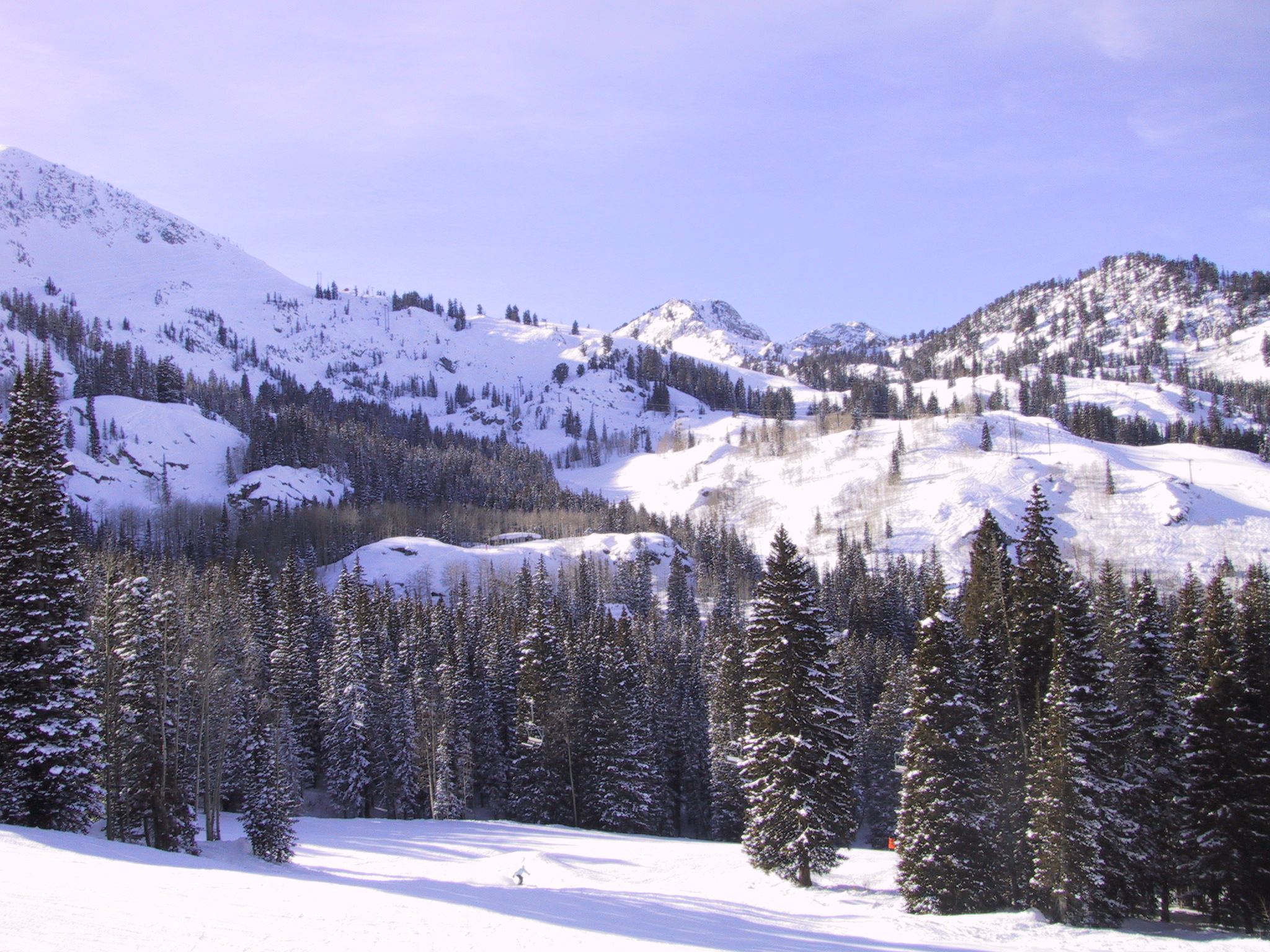
A Valley Shaped by Ice
During the last Ice Age, glaciers carved the upper reaches of Big Cottonwood Canyon. The Utah Geological Survey documents two features just downhill from Brighton: a lateral moraine roughly one mile long, now visible as an aspen-covered ridge along the northeastern side of the road, and pale granite erratics, boulders carried far from their source by moving ice. The moraine records debris deposited along the glacier's flank, while the erratics record long-distance transport by the ice itself.
A Log Lodge Above Brighton Bowl
The Wasatch Mountain Club began construction of a lodge at the head of the canyon in 1929 and completed the main structure in 1930 under a U.S. Forest Service lease. Members felled local timber, hauled the logs by horse, and built a large stone fireplace into the structure. Situated above Brighton Bowl, the lodge served historically as a base for hiking and ski tours into the surrounding lakes and hills, and it survives today as a separate historic structure.
From Rope Tow to Ski Area
Rope-tow experiments at Brighton date to the winter of 1936–37. In 1938, K Smith, Bill Eccles, and others built a working 1,400-foot (430 m) T-bar, an improvement that drew more skiers to the canyon. Smith sold the tow to Zane Doyle in 1943, shifting the operation to new ownership. Brighton later drew attention for welcoming snowboarders at a time when many resorts in the region had not yet opened their lifts to the sport.