
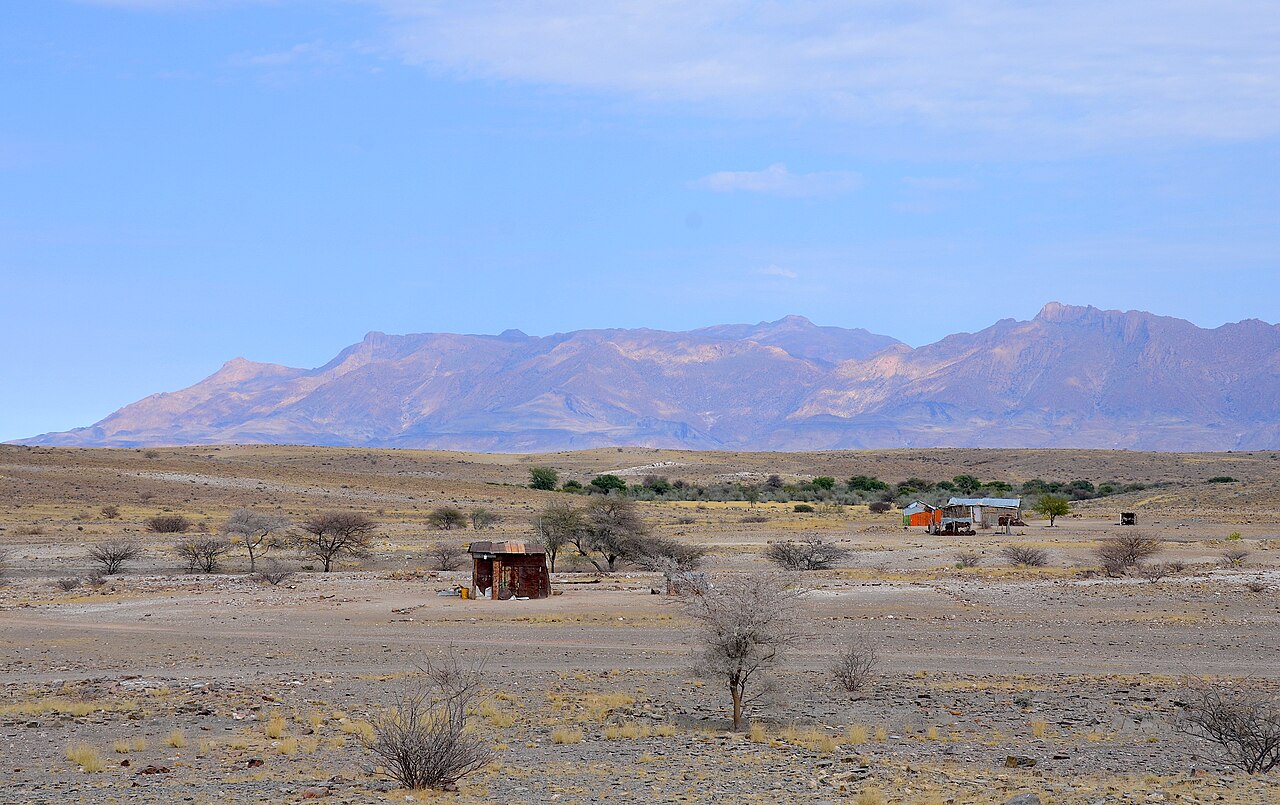
Geological Origins
The Brandberg is composed of granitic intrusions associated with ring complexes that formed during the fragmentation of Gondwana. Prolonged erosion has stripped away overlying material to expose the resistant granite core, producing the inselberg's steep-sided, dome-like profile above the surrounding plains. Namibia's World Heritage tentative-list submission describes this form and its associated ring structures; the exposed landscape represents the deeply eroded roots of ancient igneous activity.
The Tsisab Gorge and the White Lady
Within the Brandberg, the Tsisab Gorge contains a rock art frieze conventionally known as the White Lady. The Mountain Club of Namibia notes the gorge and its art in the context of the massif's broader significance.
Archaeological evidence from the Brandberg points to repeated human occupation over long periods and to patterns of movement between the coast and the interior, with the massif serving as a waypoint or resource area within a larger landscape of mobility. This evidence, expressed in the rock art and the occupational record, forms a central part of Namibia's case for the site's outstanding universal value in its tentative-list submission to UNESCO.
Monument Status and the Tentative List
The Brandberg is gazetted as a national monument in Namibia, a legal status that predates and operates separately from the World Heritage process. Namibia's submission proposes the Brandberg National Monument Area for inscription on the UNESCO World Heritage List, though the site has not been inscribed. The submission emphasises the combination of the inselberg form, the ring complexes, the Gondwana-breakup context, and the density and quality of the rock art record as the basis for the nomination.