
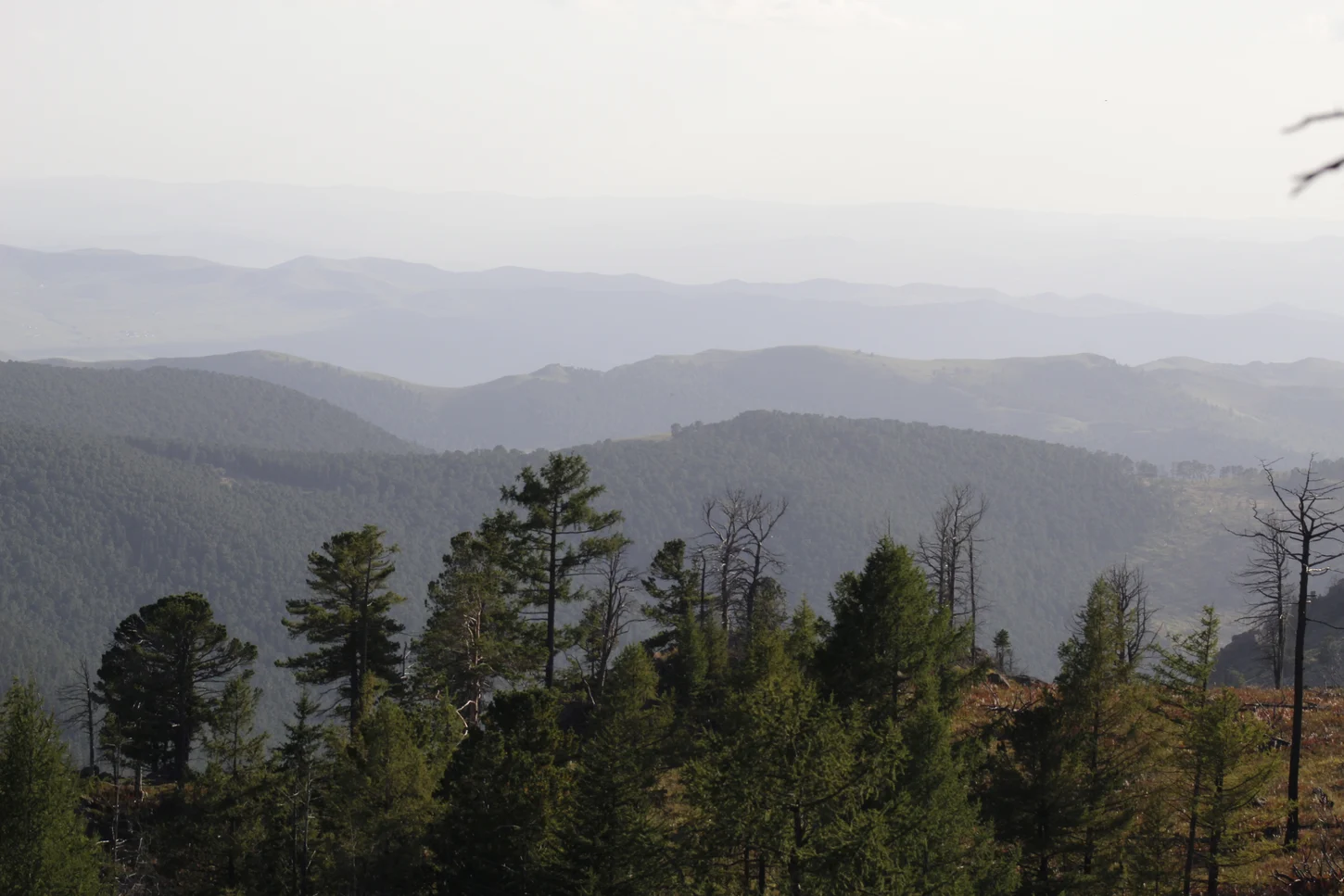
Twin Summits and Forest-Steppe Terrain
The protected area authority designates Tsetsee Gun at 2,268 m as the high point and Tüshee Gun at 2,256 m as the secondary summit. The southern flank descends through documented larch and conifer forest-steppe before opening onto the broader Mongolian plateau, while Zaisan Hill marks the lower northern edge of the reserve.
Sacred Protection and Ceremony
Mongolia's primary UNESCO submission records formal sacred protection of Bogd Khan Uul in 1778, with ceremonies and rites tied to that designation. The 1778 decree forms part of Mongolia's nomination of Sacred Mountains of Mongolia to the UNESCO World Heritage tentative list.
Manzushir Monastery and Biosphere Status
Manzushir Monastery, established as a religious centre on the south slope in the mid-eighteenth century, was destroyed in 1936 during the period of Soviet-influenced political suppression documented in Mongolia's national report. Bogd Khan Uul holds UNESCO Man and the Biosphere reserve designation through the MAB programme, recognising its forest-steppe ecosystems and conifer forest.