
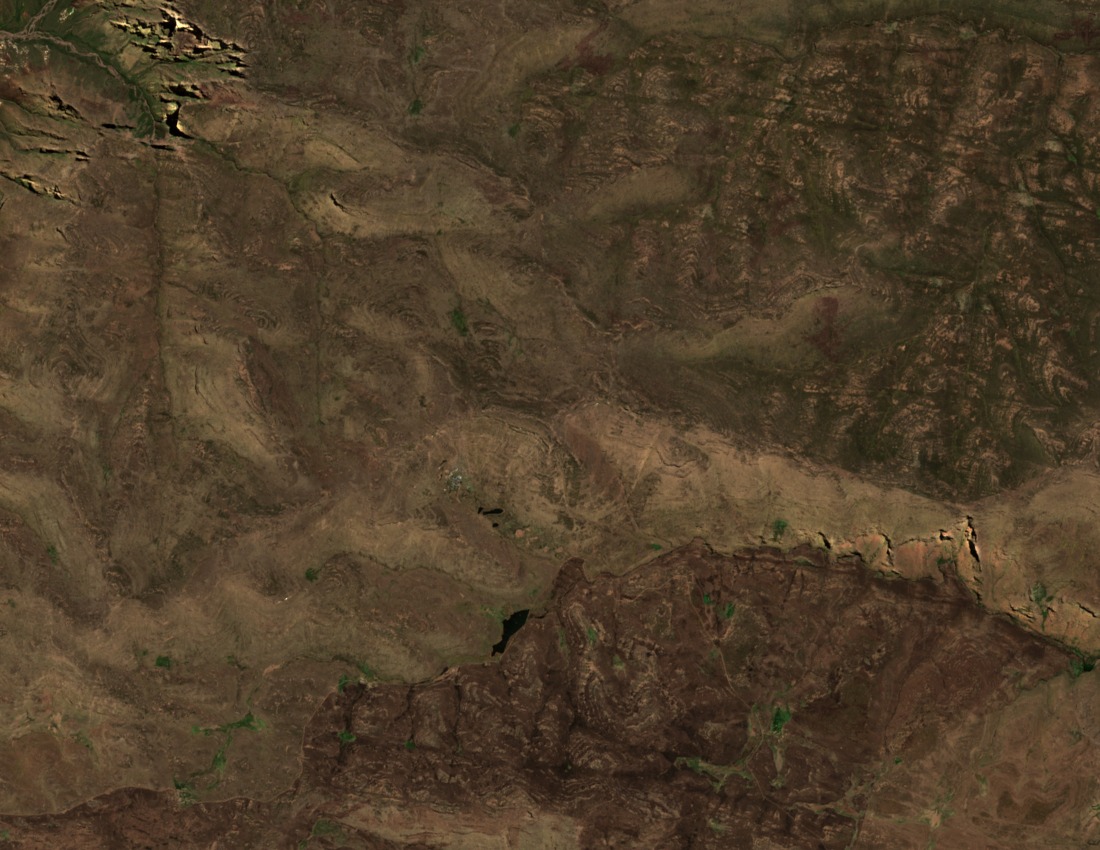
Basalt-Capped Summit Geology
The upper mountain is formed from basalt lavas that rest on older sedimentary rock, a sequence mapped across the high Drakensberg during regional field surveys. This resistant cap preserves the elevated plateau surface and governs the character of the soils and landforms found on the higher slopes.
Active Gelifluction Terraces at Altitude
Field measurements published in Geomorphology and elaborated in a University of Portsmouth study recorded active gelifluction terraces between 2,765 m and 2,855 m on the Ben Macdhui massif. Gelifluction is the slow downslope movement of water-saturated soil on frost-affected ground. The research also distinguished these active features from adjacent inactive periglacial landforms including blockstreams and patterned ground.
Festuca drakensbergensis in Afro-Alpine Grassland
A February 2020 botanical collection recorded a voucher specimen of Festuca drakensbergensis at 2,998 m in Afro-alpine grassland near the summit, documented in PhytoKeys. The collection provides a precisely elevational record for this grass species in the Eastern Cape Drakensberg and demonstrates the floristic value of the summit zone.