
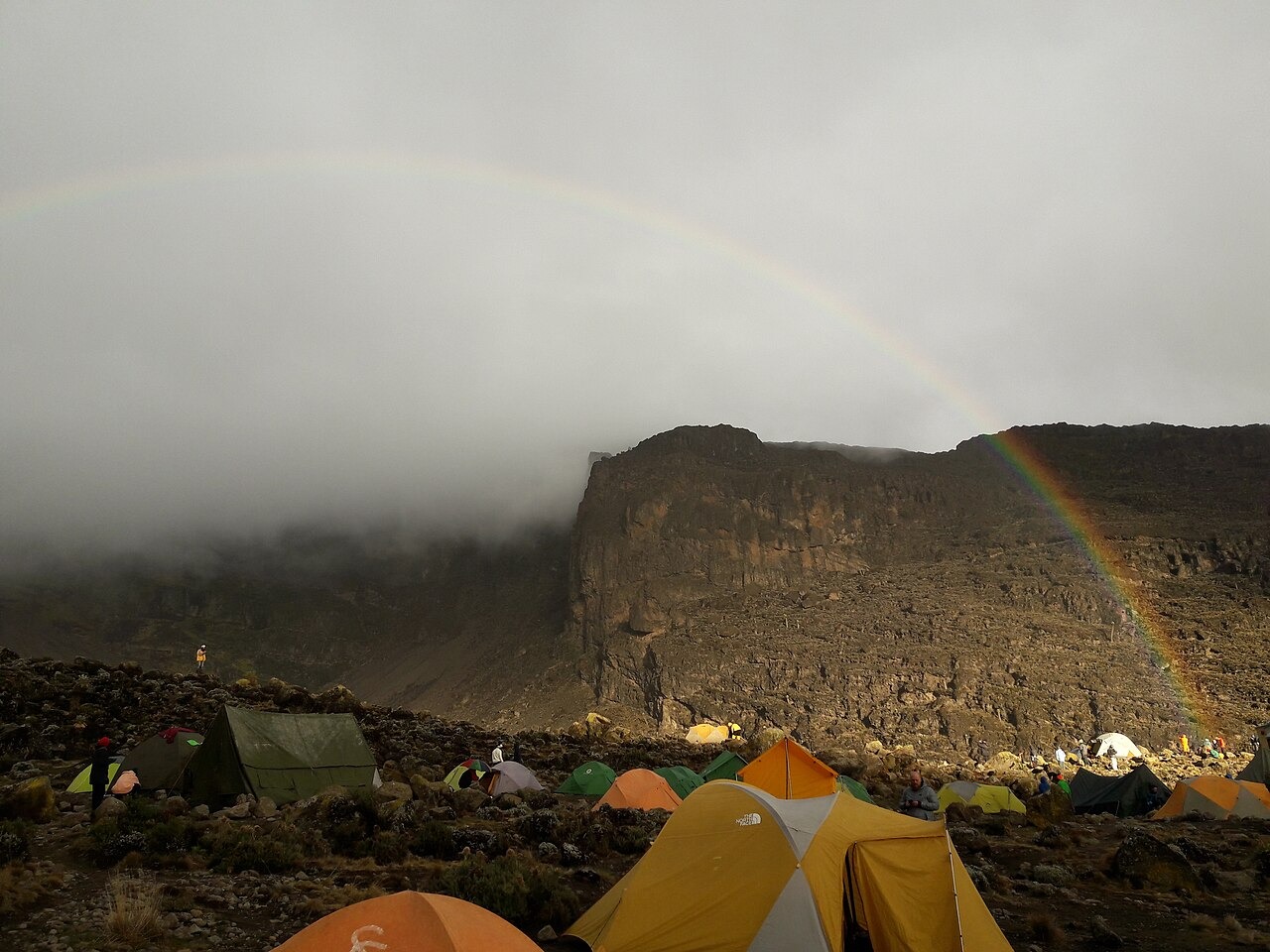
Interbedded Glacial Deposits and Lavas at the Wall's Base
Field photographs published in the Geological Society of Oman's Al-Hajar Magazine, figure 6D, record old glacial deposits interbedded with lava layers at the base of the wall above camp. These deposits are attributed an approximate age of 0.5 million years and reflect alternating surface processes in which volcanic activity and glacial accumulation each left distinct stratigraphic layers during that period of Kibo's history.
Great and Lesser Barranco in the Southwestern Terrain
The Great Barranco and the Lesser Barranco are two separate gorge features incised into Kibo's southwestern landscape. The UNEP-WCMC Kilimanjaro National Park assessment identifies both within the broader terrain mosaic of the mountain. Field glaciology observations published in the Journal of Glaciology record moraine sequences in the Great Barranco, placing those landforms within the documented record of Kibo's glacial extent across the southwestern slopes.
The Wall Above Barranco Camp on Southern Routes
The cliff exposure immediately above Barranco Camp presents a cross-section of Kibo's volcanic stratigraphy distinct from what the summit crater reveals. Tanzania National Parks includes the Barranco Wall in its terrain descriptions for the southern route network. The layered rock face, visible from camp, preserves a lateral view of the cone's constructional and erosional history that the upper caldera rim does not offer from the same aspect.