
The Six Lakes and Their Walls
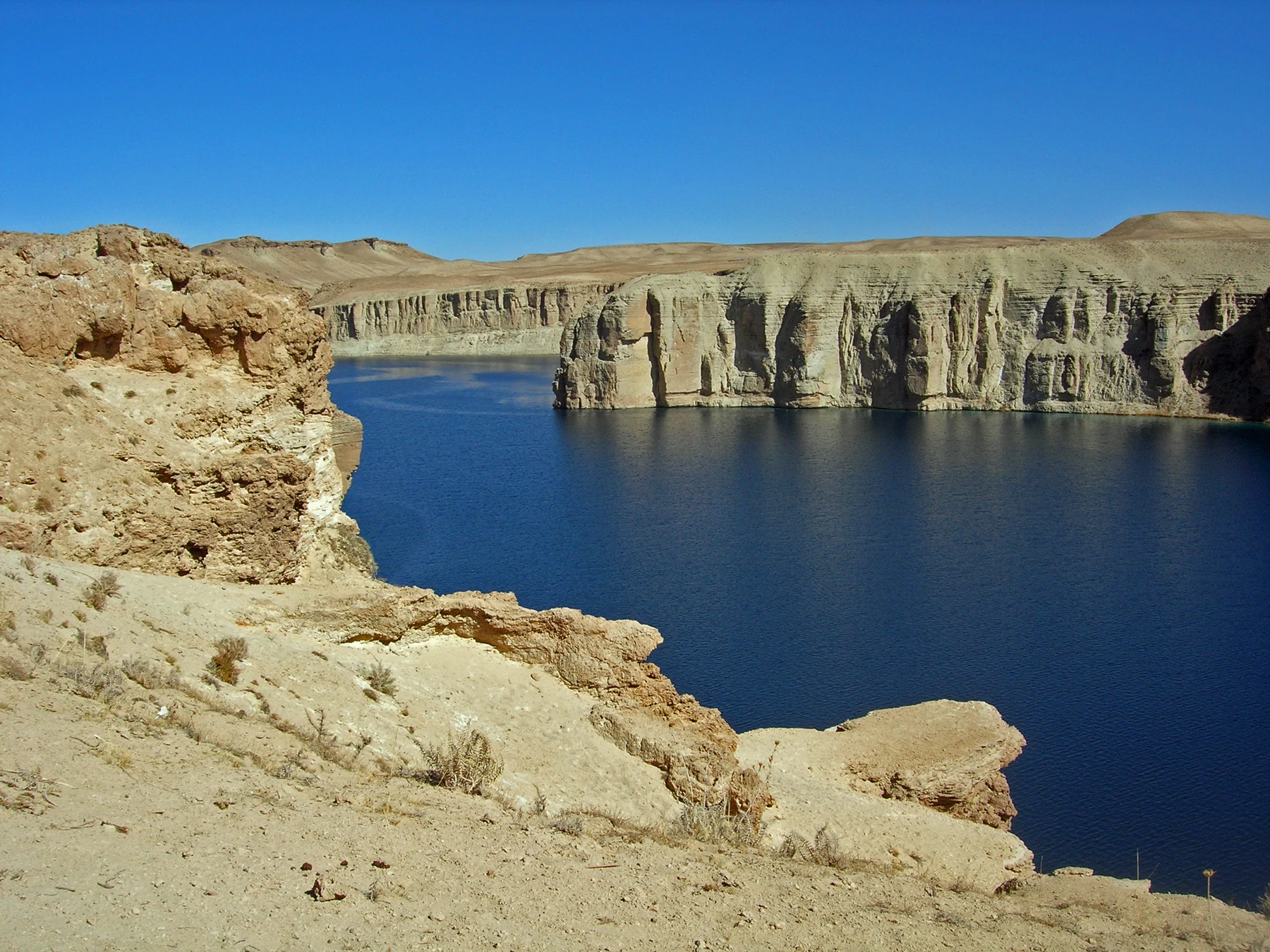
The chain runs at roughly 2,900 metres above sea level, extending east to west through Zulfiqar, Pudina (also Podina), Panir, Haibat, Qambar, and Gholaman (also Ghulaman). Zulfiqar sits within steep, largely bare limestone walls, while Gholaman at the western end contains reedbeds, and Haibat is bounded on its eastern end by a steep, narrow travertine dam.
The steep valley walls are limestone, and natural travertine dams cross the valley floor to hold the six pools at successively different heights, stepping the lakes down through the valley.
Travertine Formation
Spring water picks up dissolved calcium and bicarbonate as it moves through rock, and when carbon dioxide escapes at the surface, calcium carbonate precipitates and accumulates to build the travertine walls that separate each lake from the next. Lang and Lucas, in a 1970 field study, described algae and mosses in association with travertine in these deposits. A 1975 USGS study used X-ray diffraction to identify the carbonate material in the dams as calcite.
Leszek Lindner's study, published in 1982, combined plant remains, mollusc shells, and radiocarbon dating to trace dam development from the end of the last glaciation into the Holocene. Older travertine survives on the valley slopes.
Human Presence and Early Documentation
The Shrine of Hazrat Ali stands near Band-e-Haibat, and the landscape inspired legends among local Hazara communities, as noted in a 2014 academic study. The Swiss National Library preserves Annemarie Schwarzenbach's photograph of the first glimpse of Band-e-Amir when approaching from the east, dated by the archive to 1939–1940, with an annotation attributed to Ella Maillart.
A 2010 field survey across 116 households in 15 nearby villages, published in 2014, documented irrigated farming in adjacent alluvial valley areas alongside high-plateau grazing, recording the resource-use pressures connected to both activities.
Protected Area Status
A 1973 park declaration followed a petition from the Afghan Tourist Organization but never appeared in the official gazette. Afghanistan placed the site on its UNESCO World Heritage Tentative List on 8 September 2004. With WCS support, a protected-area committee formed in 2007 and included elected delegates from local communities.
On 22 April 2009, Afghanistan established Band-e-Amir as its first national park. The designation marked the outcome of decades of petitions, international attention, and community organising in the valley.