
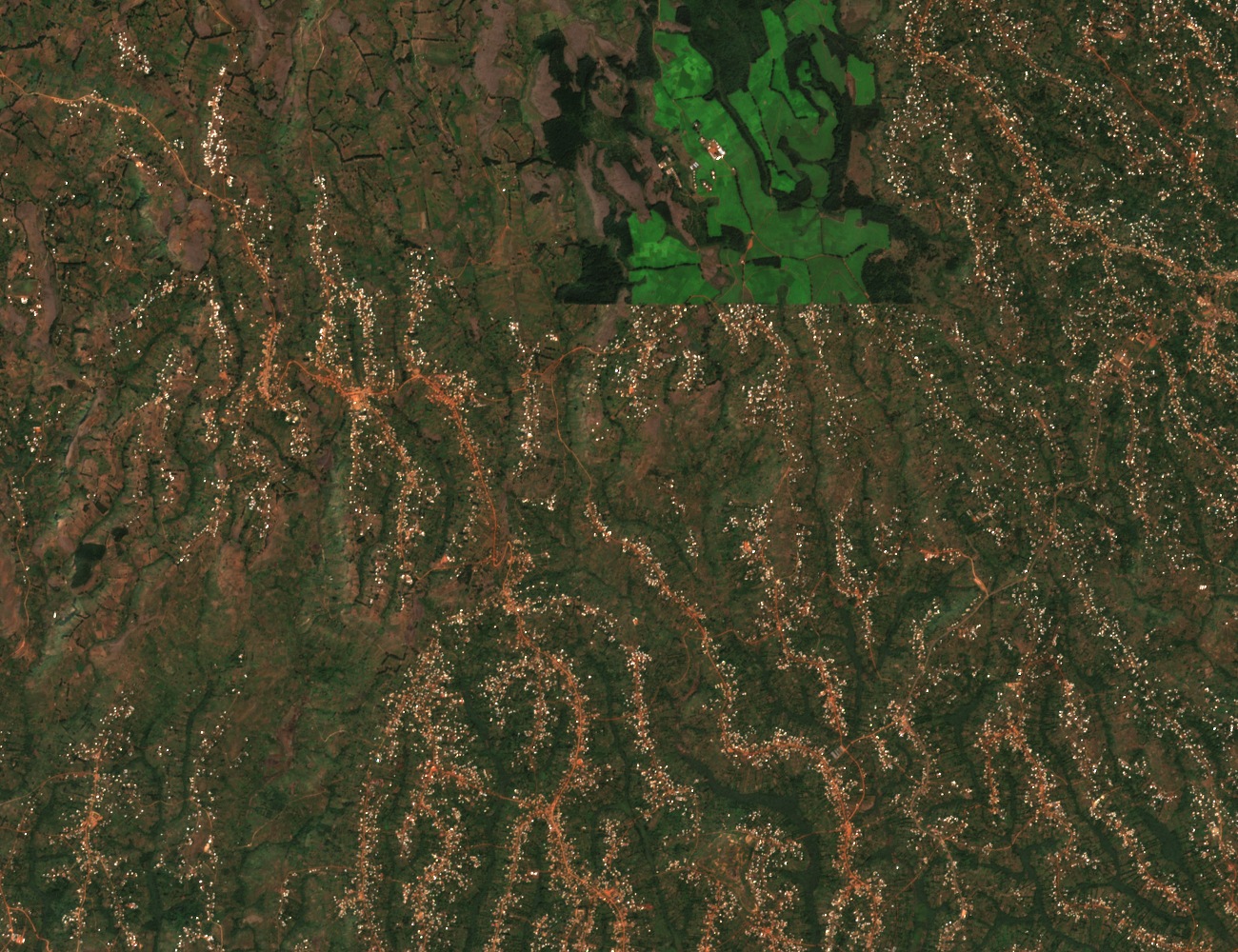
Terrain from Plateau to High Pasture
In their field study of the Bafou chiefdom, OCISCA researchers described deep soils on the older basalt plateau. Farther up, the undulating Djuttitsa terrace lies between about 1,600 and 2,000 metres. The researchers recorded maize and irrigated vegetables there, with cattle and sheep grazing the higher, mistier ground.
The satellite image from December 2024 shows the cultivated slopes north of Bafou. Small fields fill the ground between branching ridges. Higher up the massif, the land opens into grassland.
The Djuttitsa Land Dispute and the UN Petition
In the spring of 1955, Gaston Djou-Nguiatsi wrote to the Dschang gendarmerie about cattle damaging crops and fences at Djuttitsa. The Compagnie Pastorale Africaine filed its own complaint in September. It said it held a lease on about 900 hectares of pasture and objected to crops and fences within the area it claimed.
Residents petitioned the UN Visiting Mission, asking that the land-transfer protections of Article 7 of the Trusteeship Agreement be respected. The Trusteeship Council circulated the petition in May 1956. An addendum includes a letter dated 31 December 1955 in which Djou-Nguiatsi’s address is written Bafoun. The main petition uses Bafou.
Living Hedges and the Enclosure Landscape
Denis Gautier’s 1992 study examined the living hedges that marked family plots and enclosed livestock. They combined different plant species with horizontal rails made from raffia palms. Gautier found that changes in commercial farming, available labour and small livestock keeping changed how families maintained those hedges.
A study published in 2001 tracked the spread of coffee cultivation in Bafou from 1953 to 1960 and its later decline across the Bambouto mountains. A separate study by Emmanuel Foko examined how 46 Bafou farmers financed food crops in the 1991–1992 season. The two studies record changes in which crops farmers grew and how they paid to grow them.