
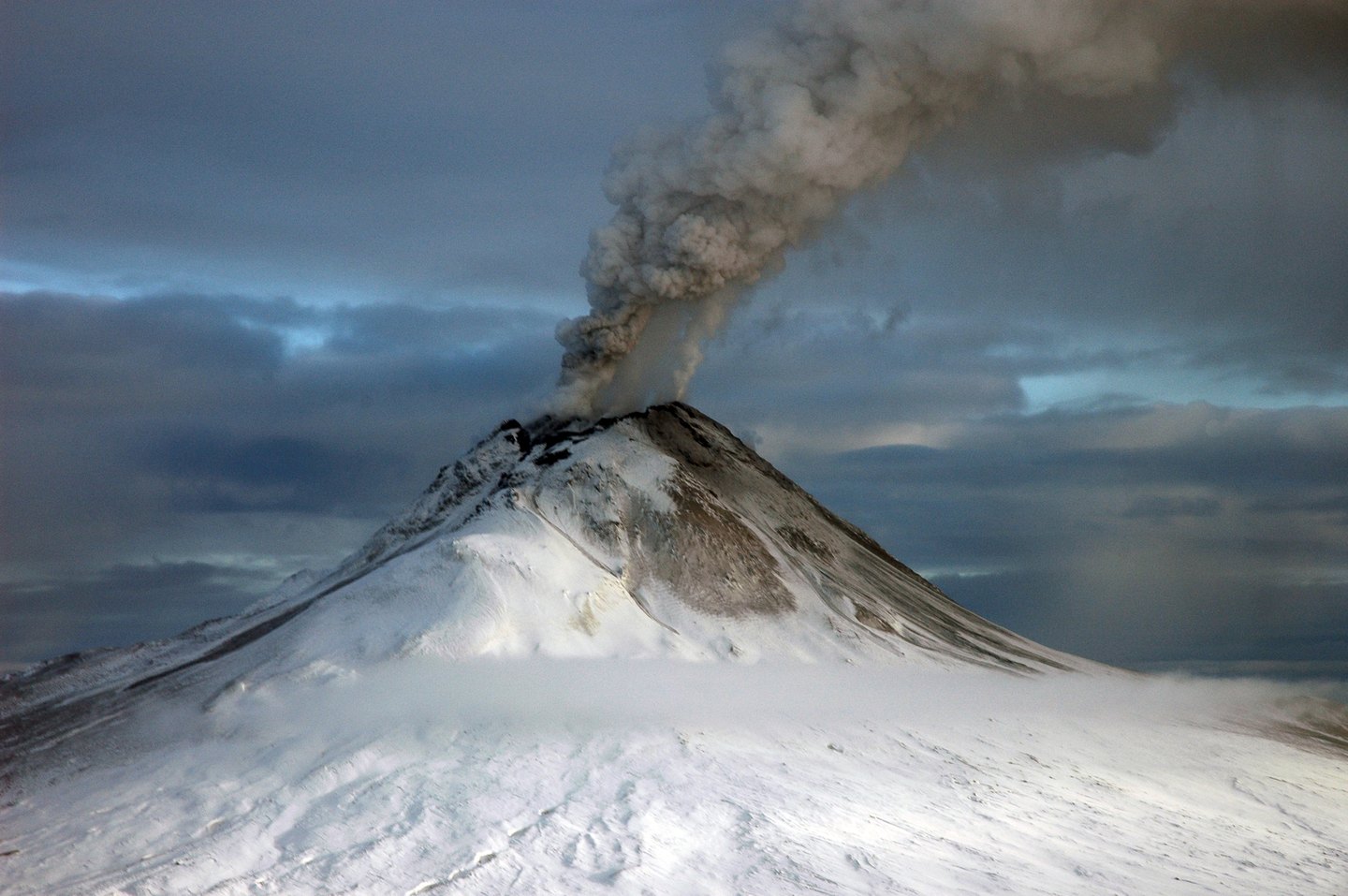
The 1883 Eruption and Its Record
On 6 October 1883, observers at English Bay, about 85 kilometers from Augustine, reported falling ash and an unusual wave. The Alaska Commercial Company logbook preserves a contemporary written account of waves and ash, and the Alaska Volcano Observatory has drawn on this record alongside geologic field evidence to reconstruct the event. Geologists interpret the wave as likely connected to a flank collapse during that eruption, though this remains an interpretation rather than a firmly established sequence.
Dome Growth and Volcanic Processes
Augustine's activity characteristically involves the extrusion of viscous lava domes near the summit. Rock collapse and volcanic flows generated during and after dome emplacement have repeatedly reworked the flanks and produced proximal deposits. The USGS has mapped these materials in detail, distinguishing ashfall distributions from deposits close to the vent using field observations and mapped extents.
The 2006 Eruption
In 2006, Augustine entered an active phase marked by explosive events followed by growth of a new lava dome. USGS technical documentation identifies distinct phases, with ashfall extending beyond the island and coarser deposits accumulating near the vent. Subsequent dome growth added material to the summit area, which USGS researchers mapped and described in published technical chapters.