
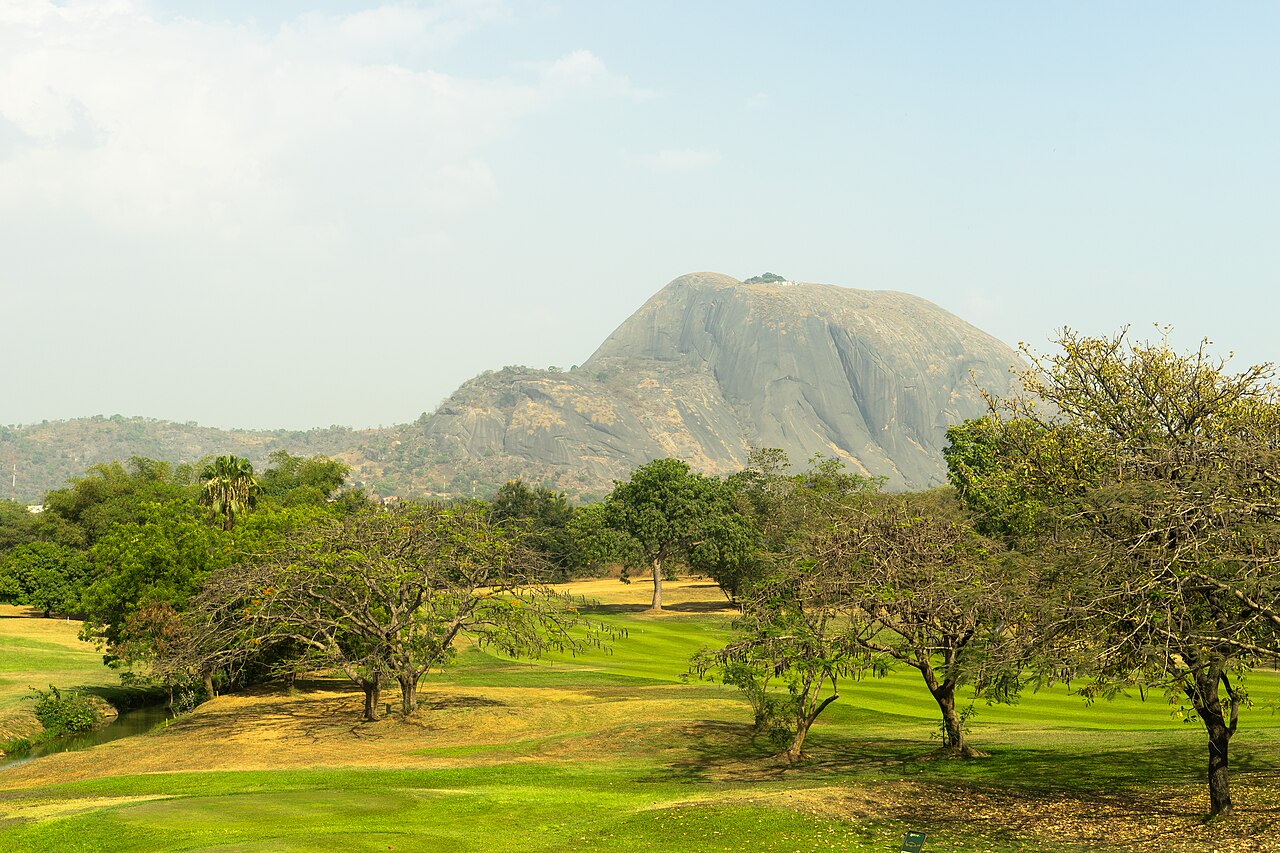
Granite Outcrop Classified by the National Defence College
The rock is composed of granite, a classification recorded by the National Defence College of Nigeria. It presents as exposed bedrock standing above the surrounding savanna landscape of the Federal Capital Territory. The NEITI survey of solid mineral endowments in the FCT further situates Abuja within a geologically varied region in which such outcrops are characteristic surface features.
Foundation of the Federal Capital in the 1976 Decree
The Federal Capital Development Authority traces the establishment of Abuja to a 1976 decree that designated a new federal capital and empowered the Aguda panel to guide its planning. That decree set in motion the administrative and physical development of the FCT, with Aso Rock positioned at the centre of the emerging governmental landscape from the earliest planning stages.
Federal Transition Completed in 1991
NEITI records that Abuja formally assumed its role as Nigeria's federal capital in 1991, completing the transition initiated by the 1976 decree. The Three Arms Zone below Aso Rock became the seat of the executive, legislative, and judicial branches of government, and the rock's outline has since served as an enduring geographical marker of the Nigerian state.