
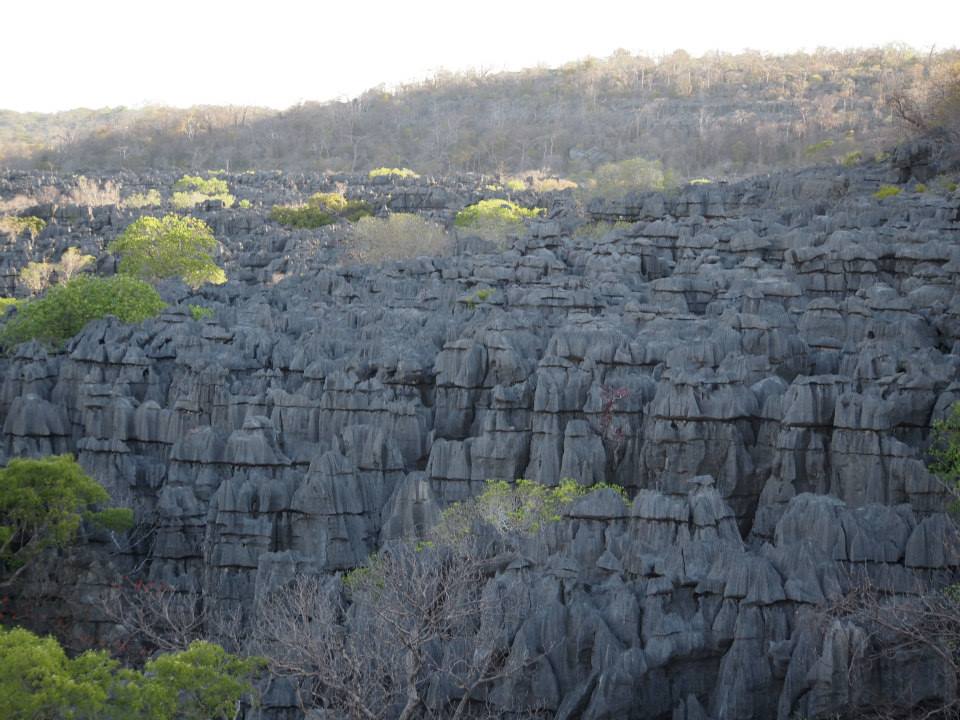
Limestone Plateau and Basaltic Foundation
The massif's geology reflects two distinct rock types. Jurassic limestone forms the plateau itself, while basalt underlies the surrounding lowlands and the floors of some canyon systems. This contrast in rock character influences drainage across the reserve, and in canyons where basalt limits drainage, moister vegetation conditions can occur—contributing to the variation in habitat found at different elevations between roughly 30 and 400 metres.
Pinnacles, Canyons, and Cave Systems
Karst dissolution operating along existing fractures in the limestone has produced the massif's characteristic surface features: fields of jagged stone pinnacles known locally as tsingy, incised canyons, and a cave network of considerable extent. The British Cave Research Association conducted systematic surveys of the Ankarana caves, producing documentation that remains a primary technical reference for the underground geology and passage extent.
Vegetation Contrasts and Biodiversity Assessment
The Key Biodiversity Areas factsheet for Ankarana distinguishes dry deciduous vegetation across the exposed plateau surface from humid evergreen communities on canyon floors where moisture is retained. This local variation supports differing assemblages of plants and animals within a compact area. Madagascar National Parks administers the reserve, and the site's 2023 inclusion in Andrefana Dry Forests recognised its significance within a broader dry-forest conservation landscape.