
Geology and Landform
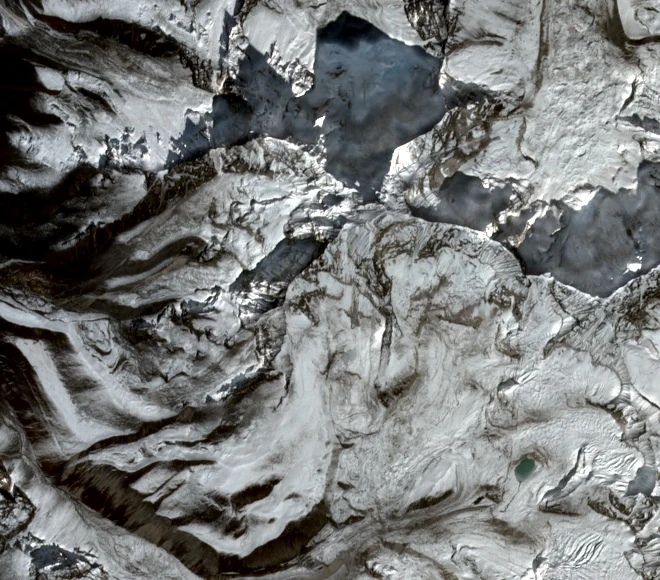
Mike Searle's 1999 geologic study identifies the pale-coloured granite visible across Ama Dablam and its neighbours as remnants of a formerly continuous leucogranite sheet, separated by erosion into the isolated masses seen today. On the southwest sector, the terrain above the glacier is broken by pronounced relief features: Michael Ward's route sketch from the 1960–61 expedition identifies the Yellow Tower, Mushroom Ridge, a hanging glacier, and upper flutings as landmarks of that historical climb.
Peter Hillary called the west face the Mingbo face, and his party climbed a route there in 1979 near the southwest ridge. Tom Frost and Darko Berljak each described their separate routes as south-face lines.
First Ascent and the 1960–61 Expedition
The Himalayan Scientific and Mountaineering Expedition of 1960–61 established the Silver Hut on the southern side of the mountain to study human physiology at high altitude. On 13 March 1961, Mike Gill, Wally Romanes, Barry Bishop, and Michael Ward made the first recorded summit ascent. The Himalayan Database records their route as the southwest ridge; Ward's own account of the same climb calls it the south ridge.
Ward calls the 1961 climb the south ridge. The Himalayan Database photo index uses the combined label "S Ridge/SW Face" for an image referenced to AAJ volume 53, page 450, 1980.
New Lines on the Adjacent Faces
In 1979, Tom Frost led a filming expedition that made the second successful ascent by the ridge. Lhakpa Dorje, Tom Frost, Jeff Lowe, and others reached the summit on 22 April. On 30 April, Lowe soloed a new line to the right of the ridge, which he described as the south face — a steep route on ice and rock that rejoined the normal line high on the mountain.
In 1986, Darko Berljak's expedition climbed a line on the south face to the left of Lowe's route. Janez Benkovic reached the summit on 16 October 1986, finishing by the southwest ridge.
Ama Dablam in the Khumbu
In his 1980 report, Tom Frost recounts that Lhakpa Dorje described Ama Dablam as sacred to older Sherpas. Lhakpa Dorje also described the hanging glacier as resembling a dablam, the traditional pendant the mountain's name references, and the peak is visible from Tengboche and Khumjung.