
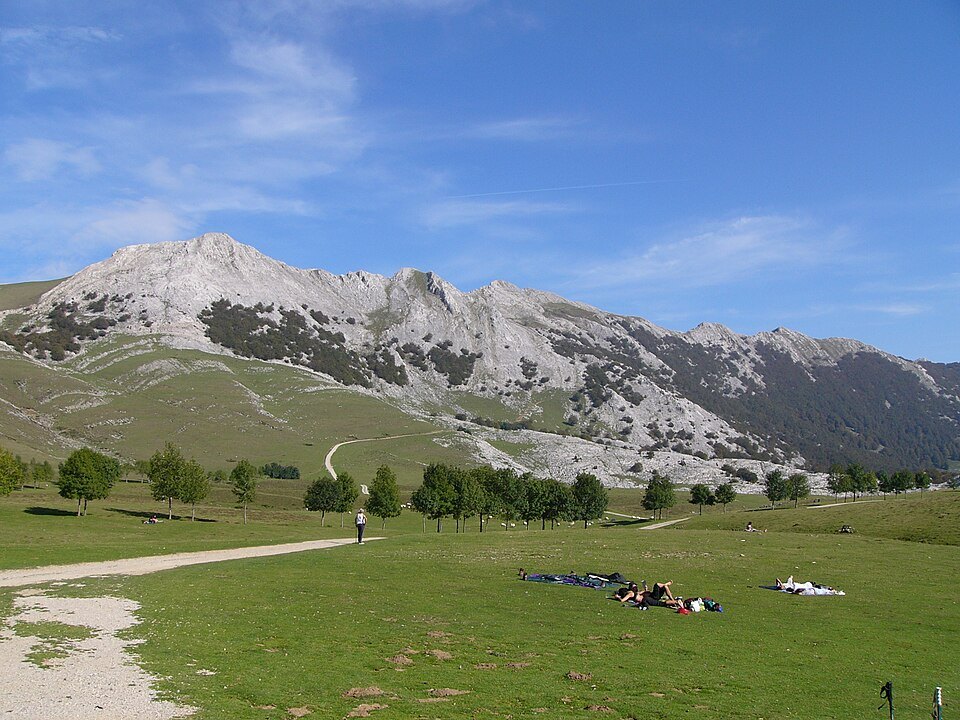
The most popular summit of the Basque massif
The Sierra de Aizkorri groups several summits within the Basque Mountains, and although Aizkorri at 1,528 metres does not hold the top position in altitude within the massif, it is the reference summit that gives its name to the entire mountain formation. Its popularity rests on several geographical factors: the chapel crowning its rocky crest, the expanse of the Urbía and Oltza highlands at its foot — where several farmsteads with grazing livestock are scattered — and the fact that it is the easternmost summit of the ridge.
The northern face of Aizkorri is described as vertiginous, in contrast to the more accessible character of other aspects. Below the summit lies the San Adrián pass, a historic geographical feature that has long structured communications in this sector of the Basque Mountains.
The chapel of the Santo Cristo and the legend of the crucifix
At the summit of Aizkorri, at 1,528 metres, stands the chapel of the Santo Cristo. According to the tradition recorded, this chapel houses a crucifix to which miraculous properties were attributed: legend holds that whenever the crucifix was taken down to Cegama or Araia, it would always reappear in the summit chapel. This oral tradition, inseparable from the place, forms part of the cultural identity of the mountain within the Basque imagination.
Beside the chapel stands a small mountain refuge inaugurated on 8 July 1934, which allows visitors to spend the night at the summit. This summit shelter is one of the features that distinguish Aizkorri from other peaks in the massif and reinforces its character as a frequently visited destination.
The Urbía highlands and high-altitude farming
The Urbía and Oltza highlands extend below the rocky summit of Aizkorri, forming a high-altitude pasture where several farmsteads shelter livestock. This traditional pastoral use creates a humanised mountain landscape that coexists with the rugged relief of the ridge. The highlands function as a threshold between the approaches from the valley floors and the vertical world of the crest, and are the usual setting from which the silhouette of the massif is perceived.